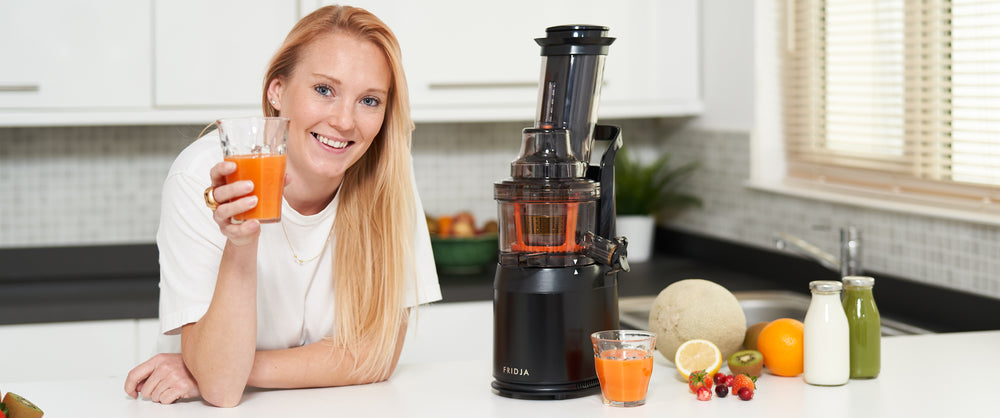


A slow juicer can look like a small kitchen upgrade, right up until you realise half the models online seem to promise the same thing. Quiet motor, better juice, easy cleaning, sleek design - all good on paper. A proper slow juicer buying guide should make the choice simpler, not more technical, especially if you just want fresh juice that fits into real life.
If you are buying your first juicer, or replacing one that felt bulky, messy or rarely left the cupboard, the smartest approach is to think less about hype and more about how you will actually use it on a Tuesday morning. The best machine is not the one with the longest list of features. It is the one you will use often, clean without a fuss and keep on your worktop without regretting it.
What a slow juicer is actually good at
A slow juicer, often called a masticating juicer, crushes and presses ingredients rather than spinning them at very high speed. That gentler process is a big part of the appeal. You usually get better extraction from leafy greens, less foam on top and a juice that feels smoother and more premium.
That does not automatically mean it is right for everyone. If your priority is throwing whole apples in and making a quick glass before heading out the door, a fast centrifugal machine may feel more convenient. But if you care about juice quality, quieter operation and getting more from ingredients like spinach, celery, cucumber, ginger and berries, a slow juicer tends to be the better fit.
The slow juicer buying guide questions worth asking
Before comparing specs, ask yourself three simple things. What ingredients do you juice most often? How much kitchen space can you realistically give up? And how patient are you when it comes to prep and cleaning?
Those answers matter more than marketing language. A compact vertical machine can suit smaller kitchens and everyday use beautifully, while a larger model may be better for households making several glasses at a time. If you mostly juice soft fruit with a few greens, your needs are different from someone batching celery juice every morning.
If convenience is your top priority
Look closely at feed chute size, assembly and cleaning design. A model can produce lovely juice, but if it needs every carrot chopped into tiny pieces and takes ages to wash, enthusiasm fades quickly.
Wide feed chutes help reduce prep, though they do not remove it entirely. The Fridja F2500 Self-Feeding Whole Fruit Juicer takes this further by allowing whole fruit to be fed in without pre-cutting, which makes a noticeable difference when you are short on time in the morning. Easy-lock parts, straightforward pulp collection and fewer fiddly components often make a much bigger difference to daily use than one extra function you may never touch.
If juice quality matters most
Pay attention to the kinds of produce you buy most. Slow juicers generally excel with fibrous and delicate ingredients, but some handle them better than others. Celery, kale and wheatgrass can reveal the difference between a capable machine and one that only performs well with apples and oranges.
You will also want a juicer that separates pulp consistently without clogging too easily. Smooth, clean-tasting juice with a good yield is the goal. More extraction means less waste, which is better for both your shopping budget and your patience.
Vertical or horizontal - which style suits you?
For most households, vertical slow juicers make the most sense. They are usually easier to place on the counter, look neater in modern kitchens and feel more intuitive for everyday juicing. If you want something that fits into a busy morning routine, this style is often the easiest entry point.
Horizontal slow juicers can be excellent, particularly for serious green juice fans, but they are often bulkier and more niche in feel. They can also take up more room and may not suit shoppers who want tidy storage and fuss-free setup. If your kitchen space is limited or you prefer appliances that feel polished rather than industrial, vertical models are often the smarter buy.
Don't overbuy on power alone
Motor wattage is one of those details that sounds decisive but rarely tells the full story. A higher number does not automatically mean a better juicer. Design, auger shape, filter quality and how efficiently the machine feeds ingredients through all affect performance.
What matters more is whether the juicer can process hard veg and fibrous greens steadily without constant reversing or jamming. A well-designed slow juicer should feel calm and capable, not like it needs coaxing through every glass.
Cleaning can make or break the purchase
This is where many buyers get caught out. They focus on juice quality in the shop, then live with the cleaning routine at home. If the machine is awkward to rinse, has a stubborn mesh filter or comes with too many separate parts, it can quickly become a weekend-only appliance.
A good slow juicer should be easy to take apart, easy to understand and quick to clean after one use. Some models are much better designed for this than others. If you know you are buying for busy weekdays, treat cleaning convenience as a main feature, not an afterthought.
What to look for in easy-clean design
Look for smooth parts, clear assembly points and fewer intricate corners where pulp gets trapped. Cleaning brushes can help, but they should not be doing all the heavy lifting. The easier the juicer is to rinse and reset, the more likely it is to become part of your routine.
This is also where a more design-led appliance can feel worth it. Good design is not just about looks. It saves time, reduces friction and makes the whole experience feel less like a chore.
Think about kitchen space and storage
A juicer that is too tall for your cupboards or too wide for your worktop can become a low-level annoyance very quickly. Before buying, check the real footprint, not just the product photos. In compact kitchens, proportions matter.
If you want to leave it out, appearance counts too. A modern, tidy machine is far more likely to earn a permanent spot on the counter than something clunky and overly commercial-looking. For many shoppers, especially in flats or design-conscious homes, that balance between performance and aesthetics is not superficial at all. It is part of whether the appliance fits your life.
Capacity, speed and the reality of daily use
A slow juicer is not about racing through ingredients. It is about steady extraction and better results. Still, capacity matters. If you are juicing for one person, a compact machine may be perfect. The Fridja f1900 Whole Fruit Juicer is a strong option for households that want reliable capacity for regular use, with enough room to juice for a couple or family without repeated emptying mid-session.
There is always a trade-off. Bigger models can feel more practical for volume but less convenient to store. Smaller models suit everyday single servings but may feel limiting if you like batch prep. The right answer depends on your routine, not a blanket rule.
Value is more than the ticket price
The cheapest juicer is not always the best value, and the most expensive one is not automatically the smartest choice either. Value comes from a mix of performance, durability, ease and how often you actually use it.
A well-priced slow juicer that looks good, works reliably and does not make a mess often delivers more everyday benefit than a premium model with specialist extras you never needed. For most households, the sweet spot is a machine that feels solid, intuitive and genuinely convenient. That is where brands like Fridja have found such strong appeal - practical appliances that improve routines without drifting into overcomplicated territory.
Features worth caring about - and ones you can ignore
Reverse function is useful. It can help clear minor blockages without forcing you to stop and dismantle everything. Non-drip spouts are also handy, especially if you care about tidy counters. Quiet operation matters more than many people expect, particularly in open-plan homes or early-morning use.
Some extras sound impressive but may not change your experience much. Multiple niche attachments can be nice, but if your goal is simple fresh juice, they should not distract from core performance. Buy the machine for the job you will actually do most often.
Who should buy a slow juicer?
If you want better juice from greens, prefer a quieter appliance and like the idea of making fresh drinks feel easy rather than messy, a slow juicer is a strong choice. It also suits shoppers trying to build healthier habits at home without turning the kitchen into a project.
If speed matters above all, or you want to drop in whole fruit with minimal prep, the Fridja f2500 Self-Feeding Whole Fruit Juicer bridges that gap nicely, combining the quality of slow extraction with a self-feeding design that keeps prep time low. That is not a downside. It is simply about choosing the appliance that matches your pace and priorities.
A final thought on choosing well
The right slow juicer should make healthy routines feel easier, not more demanding. If it looks good in your kitchen, handles your usual ingredients well and cleans up without drama, you are far more likely to use it week after week - and that is the purchase that really pays off.