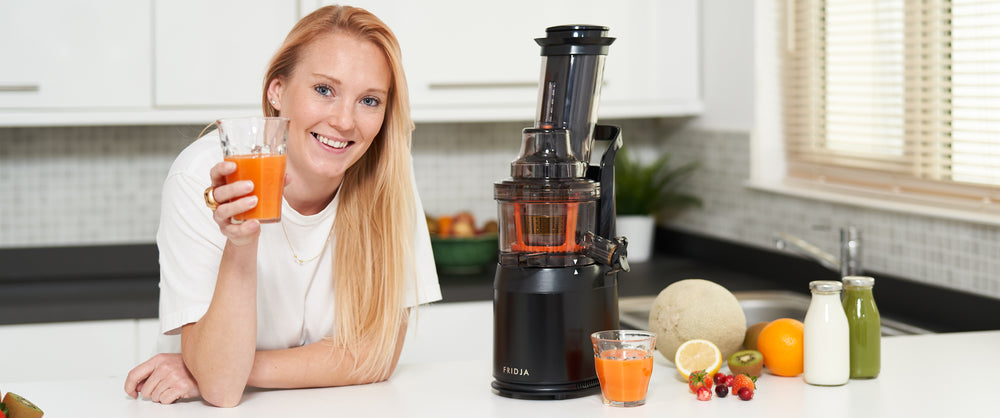


If your mornings swing between a green juice on Monday and a protein smoothie on Tuesday, the slow juicer vs blender question is not really about which machine is better. It is about which one makes your routine easier, tidier and more enjoyable often enough to earn its place on the worktop.
That matters more than specs on a product page. Most people are not building a wellness lab at home. They want an appliance that fits real life - rushed starts, limited cupboard space, quick washing up and drinks that actually taste good.
Slow juicer vs blender: the real difference
A slow juicer separates juice from pulp. It crushes and presses ingredients at a lower speed, giving you a smoother juice with the fibrous pulp removed. What ends up in your glass is lighter, cleaner and closer to what most people think of as proper juice.
A blender keeps everything together. Fruit or veg, liquid, pulp, fibre, skins and soft seeds all go into one drink. The result is thicker, more filling and usually better suited to smoothies, shakes, soups and sauce-style blends.
So the simplest answer is this: if you want juice, buy a juicer. If you want smoothies, buy a blender. The confusion starts because both can use fruit and veg, and both are sold as healthy-kitchen essentials. But the end result is genuinely different.
What your drink will actually be like
This is where the choice becomes obvious for most households.
A slow juicer gives you a drink with a lighter body and a cleaner finish. Juice from apples, carrots, celery, cucumber, ginger or citrus tastes bright and fresh, without the thick texture some people find hard to get on with. If you like shop-bought cold-pressed juice but want to make it at home, a slow juicer gets much closer.
A blender produces a denser drink because nothing is removed. That can be a huge plus if you want something more substantial. A banana smoothie with berries, oats and milk is breakfast. A green juice made in a blender is usually more like a purée unless you strain it afterwards, which adds another messy step.
Texture is often the deal-breaker. People who say they "want more fruit and veg" do not always mean they want the same type of drink. Some want a refreshing glass they can sip quickly. Others want a filling smoothie that keeps them going until lunch. Those are different jobs.
If you dislike bits, pulp or foam
A slow juicer tends to win. The lower-speed extraction method is designed to create a smoother, more refined juice. That is useful if you want something easy to drink first thing in the morning or if you are trying to get more vegetables into your day without feeling like you are chewing them.
If you want a drink that fills you up
A blender usually makes more sense. Because all the fibre stays in the drink, it feels heavier and more meal-like. That can be a benefit if breakfast needs to happen in a travel mug on the way out the door.
Which is better for nutrition?
This is where the internet often gets a bit dramatic. The truth is less flashy.
A blender keeps the whole ingredient, including fibre, which many people see as a major plus. A smoothie can be satisfying, and fibre plays an important role in a balanced diet. If your goal is to make meals more filling or reduce snacking, blending can support that.
A slow juicer removes much of the insoluble fibre, but that does not make juice pointless. It simply makes it different. Juice can be a very convenient way to increase fruit and vegetable variety, especially if you struggle to eat enough produce during the day. A glass of fresh carrot, apple and ginger juice is not trying to be a full meal. It is trying to be an easy, enjoyable one-minute habit.
There is also the question of how much produce you are realistically going to consume. Some people happily drink a green juice they would never sit down and eat in salad form. If juicing helps you be more consistent, that counts for a lot.
So nutritionally, it depends on your goal. For fullness and fibre, a blender has the edge. For easy-to-drink freshness and more veg in less effort at the point of consumption, a slow juicer is often the better fit.
Speed, prep and weekday practicality
Blenders have the reputation for being faster, and often they are. Chop ingredients, add liquid, press a button and you are done. For smoothies and shakes, they are hard to beat on convenience.
Slow juicers are usually a little more deliberate. Ingredients may need trimming or cutting depending on the feed chute, and the extraction process takes longer than blasting everything at high speed. That said, many people are happy to trade a minute or two for a better-tasting juice and less froth.
The more important question is what kind of prep you are happy to repeat. If you are making a breakfast smoothie with frozen fruit, yoghurt and protein powder, a blender slots neatly into that routine. If you want a proper morning juice with celery, cucumber, apple and lemon, a slow juicer is built for that task.
Practicality is not just about speed. It is about friction. The right machine is the one you will keep using on a Wednesday when you are tired, not only on a Sunday when you have energy to spare.
Cleaning up: the part nobody advertises enough
People often decide with their eyes, then live with the washing up.
Blenders can be quick to rinse, especially for simple smoothies. But sticky ingredients, nut butters, powders and thick mixtures can cling around the blades and jug. If you use the blender several times a day, that is manageable. If you hate hand-washing around blades, less so.
Slow juicers have more parts, so they can seem more involved at first. The trade-off is that the parts are designed around one clear job, and once you know the routine, cleanup becomes much less of a hurdle. Pulp also collects separately, which can make the process feel tidier than people expect.
There is no universal winner here. If your biggest concern is having as few components as possible, a blender may appeal. If you care more about getting a cleaner style of drink and do not mind a couple of extra pieces to rinse, a slow juicer can still feel very easy in day-to-day use.
Cost and value over time
A blender often looks like the lower-cost option, especially at entry level. It is versatile and can cover smoothies, soups, sauces and frozen drinks, so on paper it gives you lots of use cases for the money.
A slow juicer is more specialised, but that is not a downside if juice is what you genuinely want. Buying one appliance that does the right job well can be better value than buying a cheaper all-rounder that never quite delivers the drink you had in mind.
There is also a hidden value question: what are you replacing? If a slow juicer helps you stop buying expensive bottled juices, it can earn its keep surprisingly quickly. If a blender replaces café smoothies and helps with quick breakfasts, the same logic applies.
The smartest buy is not the appliance with the longest feature list. It is the one that matches a habit you already want to keep.
Who should choose a slow juicer?
Choose a slow juicer if you want fresh juice with a smooth texture, especially from fruit and veg like apple, carrot, celery, cucumber, beetroot, ginger and leafy greens. It is also the better choice if you prefer lighter drinks, want something that feels more like a juice-bar result, or find thick smoothies too heavy.
For many busy households, that cleaner style of drink is exactly the appeal. It feels easy to fit into the day, whether it is a quick morning reset or an afternoon pick-me-up that does not sit heavily.
Who should choose a blender?
Choose a blender if you want versatility first. It is ideal for smoothies, protein shakes, iced drinks, soups, dips and simple food prep. If your go-to breakfast is banana, berries, oats and milk, or you want one appliance that can handle several kitchen jobs, a blender is likely the more practical option.
It also suits people who prefer a more filling drink and do not mind a thicker texture. If that sounds like you, a juicer may end up feeling too specialised.
Can you replace one with the other?
Not very well.
A blender can make a juice-style drink only if you add water and strain it, which creates extra mess and rarely gives the same smooth result as a proper slow juicer. A slow juicer cannot make a true smoothie because it is designed to separate the pulp rather than blend everything together.
That is why the slow juicer vs blender debate is less about competition and more about intent. They overlap in ingredients, not in outcome.
If your priority is fresh, clean-tasting juice you will look forward to making, a slow juicer is the right tool. If you want thicker, more filling drinks and broader kitchen flexibility, go for a blender. And if your routine includes both, the best choice may be the one that solves the biggest daily friction first - because the appliance that gets used is always the better buy.