

Celery is one of those ingredients that sounds simple until you try to juice it every morning. The strings wrap, the pulp clogs, and suddenly your healthy habit feels like hard work. If you're shopping for the best juicer for celery, the right choice comes down to one thing - how easily it fits into real life.
What makes the best juicer for celery?
Celery is fibrous, watery and surprisingly demanding on a juicer. It needs enough pressure to extract a good amount of juice, but it also needs a design that can handle long stalks without constant stopping and scraping. That is why the best juicer for celery is usually not the fastest machine on paper, but the one that stays consistent day after day.
For most households, a slow juicer is the strongest fit. It crushes and presses celery rather than spinning it at high speed, which tends to produce better juice yield and less foam. You get a smoother glass, less waste in the pulp container and a quieter routine, which matters if you're juicing before work or before the rest of the house is up.
That said, not every slow juicer handles celery equally well. Some are excellent with soft fruit but struggle once fibres build up. Others are designed with stronger augers, better strainers and wider feed chutes that make celery much less fussy.
Slow juicer or centrifugal juicer?
If celery is your main reason for buying a juicer, a slow juicer is usually the better buy. It is more efficient with fibrous produce and tends to create a cleaner, more balanced juice. You also waste less produce over time, which starts to matter if you are buying celery every week.
A centrifugal juicer can still work, especially if speed is your top priority. It is often quicker to load and can power through ingredients at high speed. The trade-off is that celery can come out wetter in the pulp, frothier in the glass and noisier in the kitchen. For occasional use, that may be fine. For a daily celery juice routine, it can become frustrating.
This is where it helps to be honest about your habits. If you want one quick glass on weekdays and you do not mind a bit more mess, a centrifugal model may feel convenient enough. If you want reliable results, quieter performance and better value from each bunch of celery, slow juicing tends to be the smarter long-term choice.
The features that actually matter
Juice yield should be near the top of your list. Celery has a high water content, but poor machines still leave a lot behind in the pulp. A good juicer should extract thoroughly, so the leftover pulp looks fairly dry rather than soggy and heavy.
Feed chute size matters more than many shoppers expect. Narrow chutes mean more chopping, which adds friction to a routine that should feel easy. You do not need to fit a whole bunch in at once, but a wider feed chute makes a noticeable difference when you're preparing celery before work.
Cleaning is another big one. A machine can make excellent juice, but if it is fiddly to rinse, scrub and reassemble, you will use it less. The best celery juicer for most homes is not just powerful - it is easy enough to clean that using it on a Tuesday morning still feels manageable.
Motor strength and build quality also deserve attention. Celery fibres can put a lot of strain on weaker machines. You want a juicer that feels stable on the worktop, handles repeated use confidently and does not seem like it is fighting the ingredients every time you switch it on.
Finally, look at the pulp ejection and anti-clog design. These details are easy to overlook when comparing specifications, but they shape the whole experience. A juicer that keeps things moving smoothly is far more pleasant to live with than one that needs frequent intervention.
What to avoid when buying a celery juicer
It is tempting to choose the cheapest option with the biggest discount, especially if you are just starting out. But with celery, the low-cost shortcut often shows up later in wasted produce, more cleaning and a machine that feels like a compromise from the start.
Be cautious with models that are vague about performance on leafy greens and fibrous veg. Celery is not as tricky as kale in some respects, but it is still a proper test of a juicer's design. If a machine is mainly positioned around apples, oranges and soft fruit, that tells you something.
Also watch for appliances that look compact but have tiny pulp bins, awkward assembly or lots of small mesh parts. On a product page these details can seem minor. In daily use, they are often the reason a juicer ends up in the cupboard.
Is a whole fruit juicer good for celery?
A whole fruit juicer can be a great option if you want less prep and a faster morning routine. For mixed juices, they are especially handy because you can move from apples to cucumber to celery with less chopping and fewer pauses.
The key question is how the machine handles fibre. Some whole fruit juicers are built to reduce prep time without sacrificing too much extraction, while others prioritise convenience over yield. If celery is the star ingredient rather than an occasional add-in, make sure the juicer is genuinely designed for tougher produce and not just wider produce.
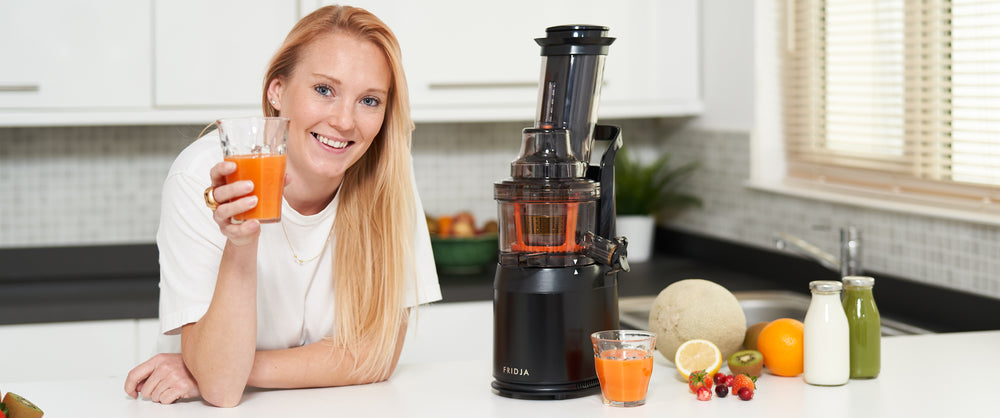
For many busy households, this is the sweet spot. You still want a machine that feels intuitive and tidy, but you also do not want a long prep session before you have even had breakfast. If that sounds familiar, a well-designed model like the Fridja f1900 Whole Fruit Juicer is often the best balance - practical, straightforward to clean and capable with a wide range of produce including celery.
How much should you spend?
There is no single right price, but there is a right level of value. A very cheap juicer may get you started, though it often comes with trade-offs in noise, durability and juice quality. A very expensive model can be excellent, but not every home needs a premium machine with features that go unused.
For most shoppers, the best value sits in the middle. You want dependable performance, modern design, straightforward cleaning and enough power to deal with celery regularly without paying for unnecessary extras. That is often where the smartest purchase lives - not the cheapest option, and not the one with the longest list of features, but the one that makes the routine feel simple.
The best juicer for celery depends on your routine
If you juice celery every single day, prioritise yield, cleaning ease and reliability. You will notice those benefits quickly, and they matter more than flashy design claims. A slow juicer is usually the strongest choice here. The Fridja f2800 Open Juicer is worth considering if you want open-top loading with straightforward daily use.
If you want celery juice a few times a week alongside mixed fruit and veg juices, you have more flexibility. A whole fruit style machine can save time and still give very good results, particularly if your mornings are busy and kitchen space is limited.
If you are new to juicing and want something approachable, choose a model that is easy to assemble and does not make prep feel like a project. Consistency beats ambition. The best machine is the one you will actually use.
A quick word on celery juice expectations
A good juicer can improve texture, yield and convenience, but it will not turn poor produce into brilliant juice. Fresh, firm celery gives the best results. Limp stalks tend to produce less flavourful juice and can feel more stringy through the machine.
It is also worth remembering that taste varies. Some people prefer pure celery juice, while others like to soften it with cucumber, apple or lemon. If that sounds more like you, choosing a juicer that handles a range of ingredients well may be more useful than focusing on celery performance alone.
So which type is right for most people?
For most GB households looking for the best juicer for celery, a slow juicer is the safest recommendation. It offers the best mix of juice quality, lower waste, quieter performance and everyday usability. If it also has a generous feed chute and easy-clean parts, even better.
A practical, design-led machine often gives the best experience because it removes the little annoyances that stop good habits from sticking. That is exactly why many shoppers end up choosing a brand like Fridja - not because juicing needs to feel complicated, but because it should feel easy enough to do again tomorrow.
When you are comparing models, think less about marketing superlatives and more about your actual mornings. The right juicer should save time, keep mess in check and make a glass of celery juice feel refreshingly simple.