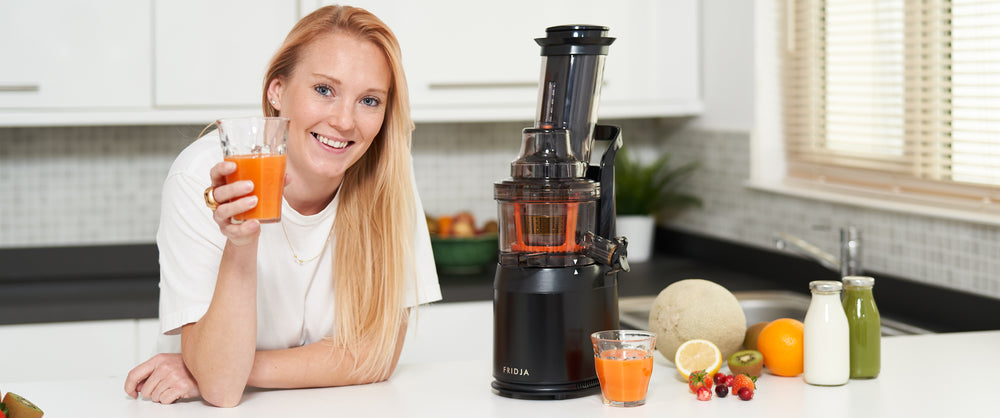


If your juicer ends up shoved to the back of a cupboard after a week, it was never the right fit for daily life. The best slow juicer for daily use is not simply the one with the longest feature list. It is the one you will actually reach for on a busy Monday morning, clean without grumbling, and keep on the worktop because it looks good enough to stay there.
That matters more than most shoppers expect. A machine can produce excellent juice, but if it is noisy, fiddly, awkward to wash, or too bulky for a normal kitchen routine, it quickly becomes a weekend appliance instead of an everyday one. For most households, daily use is about consistency and convenience just as much as juice quality.
What makes a slow juicer for daily use different?
A slow juicer for daily use needs to fit around real routines. That usually means quicker prep, less mess, easy assembly, and dependable performance with the ingredients people actually buy every week. Think apples, carrots, celery, cucumber, oranges, ginger, spinach, and the odd handful of berries - not obscure produce you only use once.
This is where the slower extraction style earns its place. Unlike high-speed juicers that shred ingredients with fast-spinning blades, slow juicers crush and press produce at a lower speed. The result is typically smoother juice with less foam and better separation. Many people also prefer the fuller flavour and more polished texture.
For everyday use, though, the bigger win is often control. Slow juicers tend to handle leafy greens and harder ingredients more steadily, and they are generally quieter too. If you are making juice before work, while the house is still half asleep, that lower noise level feels like a practical luxury.
The features that matter most
When people shop for a juicer, they are often pulled towards wattage, jargon, and oversized promises. In practice, a few simpler details usually make the biggest difference.
Easy cleaning beats clever extras
Daily appliances live or die by cleaning time. If a juicer takes ages to rinse or has awkward corners that trap pulp, motivation fades fast. Look for straightforward parts, a sensible assembly, and a cleaning process that feels manageable even when you are in a rush.
This is one of the main trade-offs to think about. Some juicers extract brilliantly but come with more parts and a longer wash-up. Others are designed to keep the routine lighter, even if they are not the most technical machine on the market. For most busy households, the better choice is the one that keeps friction low.
Feed chute size affects the whole routine
A wider feed chute can cut down prep time dramatically. That means fewer ingredients chopped into tiny pieces and less kitchen faff before you have had your first coffee. If you plan to juice most days, this matters.
The Fridja F2500 Self-Feeding Whole Fruit Juicer is a good example of how feed chute design can transform the daily routine. Being able to drop in whole fruit without pre-cutting is a small change that makes a big difference when you are short on time.
That said, a very large chute is not automatically better if the machine becomes bulkier or more difficult to clean. It depends on your kitchen space and your habits. If you are usually juicing one glass at a time, you may prefer a more compact design that is easier to store.
Consistent pulp control matters
Nobody wants watery orange-ish liquid one day and a thick green sludge the next. A good slow juicer should handle different ingredient combinations with consistent results. That means smooth juice, sensible pulp extraction, and a machine that does not struggle the moment you mix soft fruit with fibrous veg.
If you like cleaner juice, pay attention to how the juicer separates pulp. If you prefer a little texture, some machines will suit that better. Neither is wrong - it is simply a matter of preference.
Size, shape, and worktop appeal
A juicer for daily use should earn its footprint. If it is too tall for your cupboards, too wide for your worktop, or ugly enough that you do not want it on display, it adds friction before you even start.
Design matters here, and not in a superficial way. Appliances that look neat, modern, and easy to live with are more likely to become part of your routine. For shoppers upgrading their kitchen without spending premium-brand money, this balance of form and function is a big part of the appeal.
Who actually needs a slow juicer for daily use?
Not everyone does. If you only make juice occasionally, or mainly want fast orange juice with minimum thought, another style of juicer might suit you better. A slow juicer comes into its own when juicing is something you want to build into your week rather than treat as a novelty.
It is a strong fit for health-conscious households that want more fruit and veg without turning breakfast into a project. It also suits busy professionals who want one dependable appliance that can handle regular use without feeling high-maintenance. And if you are trying to make better use of produce before it goes soft in the fridge drawer, a slow juicer can quietly help cut waste too.
Ingredients and habits to think about before you buy
Before choosing a machine, be honest about what your actual juicing habits will look like. Not your ideal routine - your real one.
If your daily juice is likely to be apple, carrot, ginger, and lemon, you need a machine that handles harder ingredients smoothly. If you are more into green juices with celery, spinach, kale, and cucumber, pay attention to how well the juicer deals with fibrous produce. If your household likes softer ingredients such as berries, pineapple, or oranges, consistency becomes more important because those can turn pulpy quickly in the wrong machine.
Portion size matters too. Some people want a single glass before heading out the door. Others are making enough for a couple, or prepping a larger batch for later the same day. The Fridja F1900 Whole Fruit Juicer suits households that want reliable capacity for regular use, while the Fridja F2500 and F500 Portable Blender Duo is worth considering if you want the flexibility of both juicing and blending without buying two separate appliances.
A machine that feels ideal for one person may be frustrating for a family kitchen, so matching capacity to your actual household matters as much as any other feature.
Common mistakes when choosing a daily juicer
The biggest mistake is buying for extremes. It is easy to get swayed by a model built for heavy-duty enthusiasts when all you really want is quick, reliable juice three or four mornings a week.
Another common mistake is underestimating cleaning. Shoppers often focus on extraction quality and ignore the wash-up, only to find the machine becomes a chore. If you want a juicer to stick as a habit, convenience is not a bonus feature. It is the feature.
Price can be misleading too. The cheapest option may feel like a win at checkout, but not if it struggles after a few months or makes the process annoying. Equally, the most expensive machine is not automatically the best value. For everyday buying decisions, good value usually means strong performance, thoughtful design, and a routine that feels easy enough to repeat.
How to tell if a slow juicer is worth the space
A good test is simple. Can you imagine using it on a normal weekday when you are short on time, the kitchen is not spotless, and you are not in the mood for a complicated clean-up?
If the answer is yes, you are probably looking in the right category. The best machines for daily use remove small annoyances rather than adding new ones. They help you make fresh juice quickly, keep the process tidy, and fit naturally into your kitchen rather than demanding special effort.
This is where product design really earns its keep. A well-made slow juicer should feel intuitive from day one. It should be easy to assemble, stable on the worktop, and straightforward enough that anyone in the house can use it without reaching for the manual every time. That kind of usability is what turns a nice appliance into a customer favourite.
Choosing a slow juicer for daily use without overthinking it
If you are comparing options, keep your focus narrow. Look for a model that is easy to clean, simple to assemble, compact enough for your space, and reliable with the ingredients you already buy. If it also looks smart on the worktop and feels good value, even better.
You do not need the most technical machine to improve your morning routine. You need one that makes fresh juice feel easy enough to do again tomorrow. That is usually the difference between an appliance you were excited to order and one you are still happily using six months later.
A slow juicer should make healthy habits feel less like effort and more like part of the day - tidy, quick, and worth it every single time.