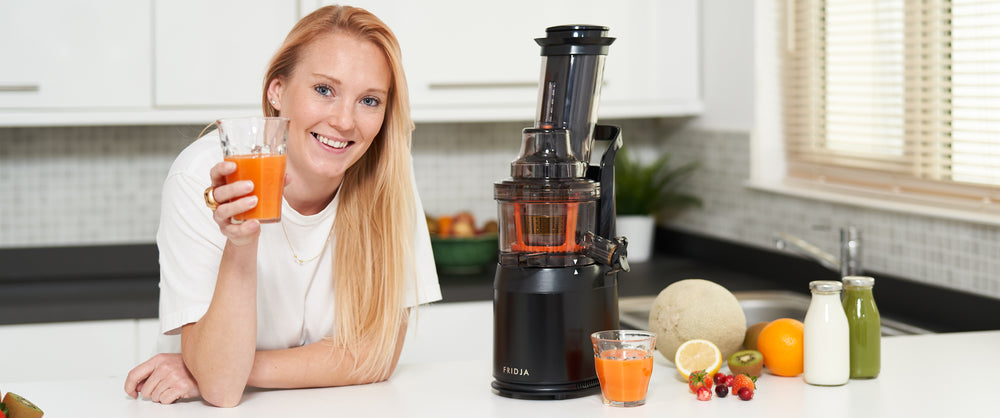


You finish a run or a gym session, you are hungry and a little shaky, and dinner is still two hours away. A good post workout smoothie fills that gap. It gives your body some protein to repair muscle and some carbohydrate to top up the energy you have just used, in a form that is easy to drink when you do not feel like a full meal.
This guide explains what actually matters after exercise, how much protein and carbohydrate makes sense, and six simple recipes you can blend in a minute. It is practical rather than miraculous: a smoothie supports recovery, it does not replace sleep, rest days or a balanced diet.
What your body needs after exercise
Recovery comes down to three things, and a smoothie can help with all of them.
- Protein provides the building blocks your muscles use to repair and adapt after training. Most sports nutrition guidance suggests around 20 to 40g of protein after a session, or roughly 0.25 to 0.3g per kilogram of body weight. More than that in one go is unlikely to add much.
- Carbohydrate refills the glycogen stores your muscles burn during exercise. This matters most after longer or harder sessions, such as a long run, a football match or a spin class.
- Fluid replaces what you lose through sweat. A smoothie counts towards this, but you will usually still need water too.
The timing is less strict than people once thought. Eating something with protein and carbohydrate within a couple of hours of training is a sensible aim, and it is especially helpful if you train again the next day. If you are sitting down to a proper meal soon after, you may not need a smoothie at all.
Getting the protein and carb balance right
The right mix depends on the type of exercise you do.
After endurance exercise
For running, cycling, swimming or long classes, carbohydrate is the priority. A ratio of roughly three or four parts carbohydrate to one part protein is a common starting point. In practice that might be a banana, some oats and a few berries alongside a scoop of protein powder or a few spoons of Greek yoghurt.
After strength training
For weights, circuits or bodyweight work, protein matters more, so a more even balance works well. Around two parts carbohydrate to one part protein is plenty for most people.
After a light session
After a gentle walk, a yoga class or a short easy jog, you probably do not need a special recovery drink. A normal meal or snack will do the job.
These are guides, not rules. Your body weight, goals and the rest of your day's food all play a part. If you have a medical condition or specific dietary needs, a registered dietitian can give advice that fits you.
Six post workout smoothie recipes
Each recipe makes one serving. Add the liquid first, then the soft ingredients, then anything frozen or hard, and blend until smooth.
1. Banana, oat and peanut butter
300ml milk or soya drink, 1 banana, 2 tablespoons of oats, 1 tablespoon of peanut butter and a scoop of vanilla protein powder. Filling and easy on the stomach, and a good all-rounder after most sessions.
2. Berry and Greek yoghurt
200ml milk, 150g Greek yoghurt, a handful of frozen mixed berries and a teaspoon of honey. Yoghurt brings protein without powder, and frozen berries make it cold and thick.
3. Chocolate and cherry
300ml milk, a handful of frozen cherries, 1 tablespoon of cocoa powder, half a banana and a scoop of chocolate protein powder. It tastes like a treat but still covers the basics.
4. Mango, spinach and ginger
250ml coconut water, a handful of frozen mango, a large handful of spinach, a small piece of fresh ginger and 150g natural yoghurt. Lighter and fresher, and good after a hot session when you want something more hydrating.
5. Coffee and oat recovery shake
200ml cold brewed coffee, 150ml milk, 2 tablespoons of oats, half a frozen banana and a scoop of protein powder. Useful after an early morning workout when you would be making coffee anyway.
6. Green apple and kiwi with silken tofu
200ml water, half an apple, 1 kiwi, a handful of spinach and 100g silken tofu. A plant-based option that blends smooth and gives a decent amount of protein without powder.
For more ideas that work outside training days, see our list of healthy blender drink ideas.
Protein powder or whole food?
You do not need protein powder to make a good recovery smoothie. Greek yoghurt, skyr, milk, soya drink, silken tofu and nut butters all add protein. Powder is simply convenient when you want a predictable amount in a small volume.
If you do use powder, check the label for added sugar and sweeteners, and look for products that have been independently tested if you compete in a tested sport. It is also worth remembering that a smoothie with powder in it is still food, so count it as part of your day rather than an extra on top.
Blending at the gym or on the go
Many people blend at home and carry the drink with them, but that only works if it stays cold and does not separate in the bag. A portable blender lets you add the liquid and frozen fruit at home, then blend fresh after your session.
The Fridja f600 Stainless Steel Portable Blender was built around this problem. Its cup is double-walled 304 stainless steel, insulated like a good flask, so smoothies stay cold for hours. Six blades turning at 18,000 rpm crush ice in seconds. When you have finished blending, the blender head lifts away and a drinking lid goes on in its place, so the cup you blended in is the cup you carry.
If you prefer something lighter, the Fridja f500 Portable Blender handles smoothies and protein shakes, with a clear bottle made from BPA-free Tritan. You can compare both in our portable blenders collection, and our guide to choosing a portable blender for protein shakes goes into more detail.
Tips for better recovery smoothies
- Prepare freezer packs. Bag up fruit, oats and seeds for each smoothie so you only need to add liquid. Our portable blender meal prep guide shows how.
- Keep it simple. Five ingredients is usually enough. More rarely makes it better.
- Use frozen fruit instead of ice. It chills and thickens the smoothie without watering it down.
- Watch the portion. A recovery smoothie should be a snack, not a second dinner. Around 300 to 500ml is plenty for most people.
- Rinse straight away. A quick rinse with warm water after drinking stops protein and fruit drying onto the blades.
Smoothie or shaker bottle?
A shaker bottle is fine for mixing protein powder with water or milk. It cannot blend fruit, oats, nut butter or ice, so you are limited to powder and liquid. A blender gives you real food in the mix, which tends to be more filling and more enjoyable. Our comparison of a portable blender vs a shaker bottle covers the trade-offs.
A sensible routine you will stick to
The best post workout smoothie is the one you will actually make. Pick two or three recipes you like, keep the ingredients in, and blend after your harder sessions. Pair it with good sleep, enough water and regular meals, and your recovery will take care of itself. If you want to build the habit, our easy smoothie prep routine is a good place to start.