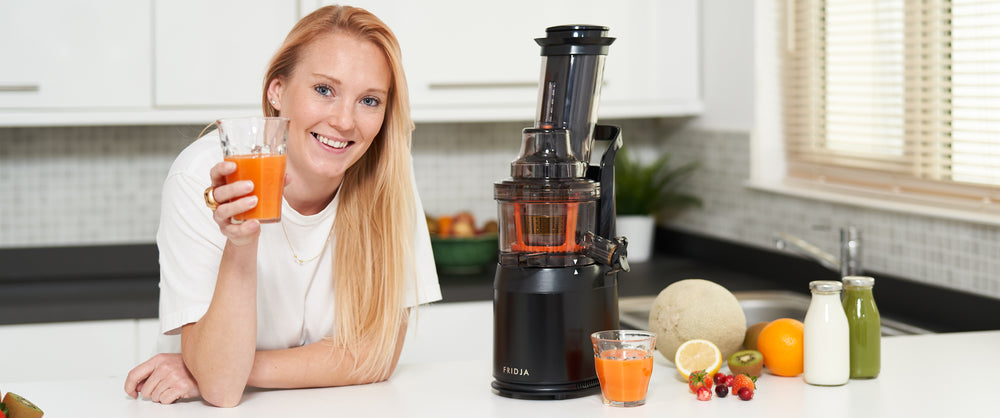


You can spot a good juicer decision by one simple sign - it actually gets used on a Tuesday morning, not just admired on the kitchen worktop. That is why the question, are slow juicers healthier, matters less as a lab experiment and more as an everyday choice. If a juicer helps you make fresh juice more often, with less fuss and better results, that can have a genuine impact on what ends up in your glass.
Are slow juicers healthier in real life?
The short answer is: often, yes - but not in every way, and not for every household.
Slow juicers, also called masticating juicers, crush and press produce at a lower speed than traditional centrifugal juicers. Because they generate less heat and less foam, they are often seen as the healthier option. The usual claim is that they preserve more nutrients and create juice that stays fresher for longer.
There is some logic behind that. Lower-speed juicing can reduce oxidation, which is what happens when juice is exposed to air and begins to degrade. Less oxidation may help retain certain vitamins and plant compounds, especially if you are making juice ahead of time rather than drinking it immediately.
But this is where the marketing can run ahead of the reality. The difference is not always dramatic enough to transform juice into a completely different health product. If you drink your juice straight away and use a good-quality machine, both slow and centrifugal juicers can produce nutrient-rich juice from fresh fruit and veg.
So yes, slow juicers can be healthier, particularly when it comes to juice quality, shelf life and extracting more from leafy greens. But the healthier option for you also depends on what you juice, how often you use it, and whether the machine fits your routine.
What makes a slow juicer different?
A slow juicer works by feeding ingredients through an auger that crushes and squeezes them against a screen. That slower process usually produces juice with less separation, less froth and a smoother texture.
A fast juicer uses spinning blades to shred produce quickly and separate juice using centrifugal force. That speed is convenient, especially when you are short on time, but it can introduce more air into the juice.
For many households, the practical differences are just as important as the technical ones. Slow juicers are often better at handling kale, spinach, celery, wheatgrass and soft fruits. They also tend to extract more juice from the same ingredients, which means less waste in the pulp container and better value from your weekly shop.
If you regularly buy expensive greens or like making combinations with radish, cucumber and lettuce, that higher yield is not a minor perk. It adds up.
The health benefits people are really asking about
When most people ask whether slow juicers are healthier, they are usually asking four separate questions: does the juice keep more nutrients, is it better for digestion, does it contain less sugar, and is it better than shop-bought juice?
On nutrient retention, slow juicers have an edge, especially for delicate ingredients. Vitamin C and some antioxidants can degrade with heat, light and air exposure. Since slow juicers generally create less heat and oxidation, they may preserve more of those compounds. That said, fresh juice of any kind is still best consumed soon after making it.
On digestion, slow-juiced drinks can feel easier on the stomach for some people because the juice is smoother and often less aerated. Less foam can mean a more pleasant texture and, for some, less bloating. This is not universal, but it is a commonly noticed difference.
On sugar, the juicer type is not the main issue. A slow juicer does not magically remove sugar from fruit. If your recipe is mostly apples, oranges and pineapple, the sugar content will still be high. The healthiest approach is to balance fruit with vegetables, herbs and ginger, regardless of the machine.
Compared with shop-bought juice, a home slow juicer often comes out ahead. You control the ingredients, avoid unnecessary additives, and can make blends that lean more heavily on veg than most supermarket options. That alone can make a real difference.
The fibre question matters more than many people think
One of the biggest misconceptions around juicing is that more expensive or slower always means automatically healthier. Juice, whether made in a slow juicer or not, removes most of the insoluble fibre found in whole fruit and vegetables.
That does not make juice bad. It just means juice should be seen for what it is: a convenient way to increase your intake of fresh produce, not a replacement for eating whole foods.
If your main goal is better digestion, steadier energy or feeling fuller for longer, a smoothie may serve you better than a juice because it keeps the fibre. If your goal is a quick, fresh drink that helps you get more greens into your day, juicing can be brilliant.
The healthiest routine often includes both. Whole fruit at breakfast, a green juice mid-morning, a proper lunch, plenty of water - that sort of balance is far more useful than obsessing over a single appliance claim.
Are slow juicers healthier for every ingredient?
Not equally. This is where slow juicers really start to show their strengths.
Leafy greens and herbs are where they tend to outperform fast juicers most clearly. Spinach, kale, parsley, mint and wheatgrass can be awkward in a centrifugal machine, often producing disappointing yield. A slow juicer usually handles them far better.
Soft fruits also tend to come through with a nicer texture. Berries, peeled citrus and ripe pears can be messy in some juicers, but a slow machine often gives a more consistent result.
Hard produce like carrots and beetroot works well in both types, although the texture and separation may differ. If your juices are mostly carrot, celery and lemon and you always drink them immediately, a centrifugal model may still suit you perfectly well.
That is why there is no one-size-fits-all answer. The healthiest machine is partly the one that matches the ingredients you actually buy.
Convenience still counts towards health
This is the part many buying guides miss. A juicer can only improve your routine if it feels easy enough to use and easy enough to clean.
Some people happily spend extra time prepping produce and rinsing parts because they love the quality of slow-pressed juice. Others want speed above all else. If a machine feels fiddly, bulky or annoying to wash up, it risks becoming another cupboard resident.
For busy households, health is often built on repeatable habits, not ideal scenarios. A juicer that helps you make a glass of fresh juice before work, after the gym or while sorting the kids' breakfast is doing more for your routine than one with impressive specs that rarely leaves the box.
That is one reason design matters. A well-thought-through slow juicer can make healthy choices feel straightforward rather than time-consuming, which is exactly the sort of upgrade that tends to stick.
What a slow juicer is best for
If you want greener juices, better yield and juice that holds up well in the fridge for later in the day, a slow juicer makes a lot of sense. It is particularly useful for people trying to increase their vegetable intake without relying on bottled juices or sugary smoothie blends.
It also suits households that care about getting more from their ingredients. If you are spending money on fresh produce each week, squeezing more juice from it is both practical and satisfying.
And if taste matters to you, slow-pressed juice often wins on that front too. Many people find it fresher, cleaner and less frothy, which makes it easier to enjoy regularly.
So, are slow juicers healthier?
Usually, yes - especially if you value higher juice yield, less oxidation, better performance with greens and juice that keeps its quality for longer. But the gap is not so huge that every other juicer becomes a bad choice overnight.
The healthier option is the one that helps you make fresh, balanced juice often enough for it to become part of your life. Use more veg than fruit, drink it as part of a sensible diet, and choose a machine you will genuinely enjoy using.
If a slow juicer makes that easier, it is not just healthier on paper. It is healthier where it counts - in your everyday routine.