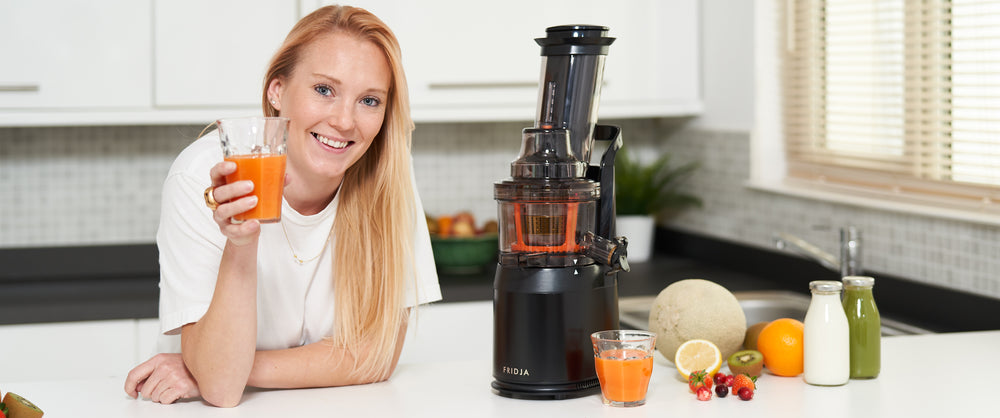



Black Friday lands on 27 November this year, and juicers are one of the kitchen appliances that turn up in almost every sale. A big percentage off looks tempting, but the number on the sticker tells you very little on its own. A cheap juicer that is a pain to clean ends up in the cupboard, and a "50% off" price can be built on a starting price nobody ever paid.
This guide gives you a simple way to judge a juicer deal on what matters: the type of juicer, how much prep and cleaning it asks of you, what it can make, and whether you can still get parts and help in a few years.
Start with what you will actually juice
Before you look at a single price, think about the glass you want at the end. If it is mostly orange juice at breakfast, a citrus press may be all you need. If you want apple, carrot, beetroot, ginger or leafy greens, you are looking at a slow juicer, also called a cold press or masticating juicer. These press produce with a slowly turning auger rather than shredding it with a fast spinning blade, which gives smoother juice with less foam and a drier pulp.
Then think about how often you will use it. Daily juicers should care most about prep time and cleaning. If you are still deciding between models, our honest comparison of the f2500, f2800 and f1900 walks through who each one suits.
Seven checks before you buy a juicer deal
- Check the "was" price. A discount is only a saving if the higher price was real. Look at what the juicer sold for over the past few months, not just on the day. In the UK, a "was" price is meant to be one the product was actually sold at for a reasonable period, so be wary of reference prices that only appeared in early November.
- Look at the chute size. This decides how much chopping you do. The f2500 Self Feeding Whole Fruit Juicer has a 135mm hopper that takes whole apples, and the f2800 Open Whole Fruit Juicer has a 180mm open chute, the widest in our range. Narrow chutes mean more knife work every single time.
- Find out how it presses. Slow juicers turn at a low speed. The f2800, for example, runs at 43 to 50 RPM with a 250W motor. If a listing does not say whether a juicer is centrifugal or slow, ask, because the juice and the cleaning are very different.
- Read the cleaning instructions. This is where cheap juicers lose their appeal. Check how many parts come apart, whether they are dishwasher safe and what the filter looks like. The f2500's detachable parts are dishwasher safe below 40°C, and the f2800's filter rinses clean in about a minute with the included brush. Our guide to cleaning a slow juicer properly shows what a realistic routine looks like.
- Count what it makes. Many slow juicers do more than juice. All Fridja slow juicers make nut milk, sorbet and fruit ice cream, and the f2800 comes with a frozen fruit sorbet attachment in the box. Extras you will use add real value; extras you will not are just more parts to store.
- Make sure spare parts exist. Seals, strainers and jugs wear out or get dropped. A juicer you can repair is better value than a cheaper one you have to replace. Look for a proper spares page, like our f2500 spare parts, before you buy.
- Look for independent testing. Reviews from verified buyers help, and independent testing helps more. The f2500 is a Which? Best Buy, and the f1900 has been recognised by Good Housekeeping. An award does not make a deal good, but it does tell you the juicer itself has been put through its paces.
Red flags in a Black Friday juicer listing
- Vague specs with no chute size, speed or motor power listed.
- No spare parts, no instruction manual and no clear way to contact the seller.
- Countdown timers and "only 2 left" banners designed to rush you.
- Bundles padded with accessories you would never buy on their own.
- Claims that juice will detox you or cure anything. Fresh juice can be part of a balanced diet, but no juicer does more than that.
Work out the real cost per glass
The juicer is a one-off cost; the fruit and veg are not. Over a year, what you put through the machine usually costs more than the machine itself, so yield matters. A slow juicer that leaves dry pulp gets more juice from the same bag of apples. Our guide to how much fruit you need for a glass of juice will help you budget, and seasonal UK produce such as apples, carrots and beetroot keeps the weekly shop sensible through winter.
It is also worth remembering the NHS guidance: fruit juice and smoothies count as a maximum of one of your 5 A Day, and a combined total of 150ml a day is the suggested limit. A juicer that makes one good glass is more useful than one that makes a litre you will not drink.
Which Fridja juicer suits which kitchen?
f2500 Self Feeding Whole Fruit Juicer
Our lead juicer and a Which? Best Buy. Drop whole fruit into the 135mm hopper, close the lid and it feeds itself, so your hands are free. It measures 21 x 19.5 x 43.7 cm and weighs 3.8 kg, and the anti-drip tap holds the juice until you are ready to pour. A good fit for busy mornings.
f2800 Open Whole Fruit Juicer
The one for big batches and minimal prep. The 180mm open chute takes whole apples, oranges and pears, the self-feeding hopper does the work, and it comes with a 1 litre juice jug and a sorbet attachment. It is rated for up to 30 minutes of continuous use, which suits households that juice a lot at once.
f1900 Whole Fruit Juicer
The f1900 is a heavy-duty cold press juicer with a wide chute, a stainless steel body and BPA-free Tritan parts. You feed it by hand, which some people prefer because you control the pace. It also makes nut milk, sorbet and fruit ice cream.
You can compare all three side by side in our juicer collection.
Bundles and refurbished juicers
A bundle can be good value if you would buy both items anyway, for example a juicer and a portable blender for smoothies. Our exclusive deals page lists the combinations we offer, so you can check the saving against buying each item on its own.
Refurbished juicers are another way to spend less without buying an unknown brand. Look at the condition grade, what has been checked and what cover comes with it. Stock in our refurbished range changes often, so check which models are available when you are ready to buy.
When to buy
Black Friday is on 27 November and Cyber Monday follows on 30 November. Many retailers start their offers earlier in the month, so if a deal passes the checks above, you do not need to wait for the day itself. If the juicer is a Christmas present, check delivery times and the returns policy before you order, so the recipient can swap it if it is not right for them. Every Fridja order comes with free delivery and a money-back guarantee.
Frequently asked questions
Is Black Friday a good time to buy a juicer?
It can be, as juicers are widely discounted in late November. The key is checking that the "was" price was real and that the juicer suits how you will use it. A modest discount on a juicer you will use every week is better value than a big discount on one that ends up in the cupboard.
What should I look for in a juicer deal?
Check the type of juicer, the chute size, how easy it is to clean, what it makes besides juice and whether spare parts are available. Then compare the sale price with what it sold for over the past few months. Independent testing, such as a Which? Best Buy, is a useful extra signal of quality.
Is a slow juicer worth paying more for?
For most people who juice regularly, yes. Slow juicers press produce rather than shredding it, which gives smoother juice with less foam and drier pulp, so you get more from the same fruit. They also handle leafy greens and ginger well, and many make nut milk and sorbet too.
Should I buy a refurbished juicer on Black Friday?
A refurbished juicer from the original brand can be a sensible way to save money. Check the condition grade, what has been tested or replaced, and what warranty or guarantee is included. Avoid refurbished listings from unknown sellers that give no details about the checks carried out or the parts used.