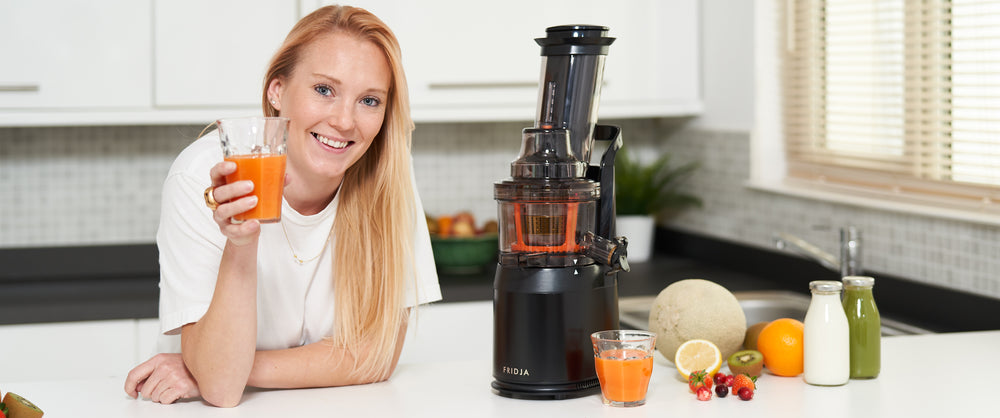


Anyone who has bought a slow juicer has had the same moment: you load up a bag of apples, switch on, and look at the jug wondering whether that is really all you get. It depends on what you are juicing. A juicy orange gives far more than a dense carrot, and a crisp apple gives more than a soft one. Once you know roughly how much fruit you need for a glass of juice, you can shop, plan and budget without the guesswork.
This guide gives realistic amounts for the fruit and veg people juice most in the UK, explains what changes the yield, and shows you how to work out what each glass costs you.
The short answer
For a standard 250ml glass, expect to use somewhere between 400g and 700g of produce. Very juicy fruit such as oranges, watermelon and cucumber sits at the lower end. Firm, dense vegetables such as carrots and beetroot sit at the top end. A useful rule of thumb is that most fruit and veg give between a third and three fifths of their weight as juice in a slow juicer.
It is also worth deciding what "a glass" means to you. The NHS suggests no more than 150ml of fruit juice, vegetable juice and smoothies combined a day, so a small 150ml glass is a sensible daily serving. Every amount below can be scaled down by about 40% for a 150ml glass.
How much fruit and veg for a 250ml glass
These figures are rough guides for firm, fresh produce in a slow juicer. Sizes and varieties vary a lot, so treat them as a starting point rather than a promise.
- Apples: three to four medium apples, or roughly 500g to 600g. Crisp varieties such as Gala and Braeburn give the most. Our guide to homemade apple juice covers the best varieties.
- Oranges: three to four medium oranges, peeled. Heavy fruit for its size is usually the juiciest.
- Pears: about three medium pears that are ripe but still firm. Very soft pears turn to purée rather than juice.
- Carrots: eight to ten medium carrots, or around 600g to 700g. Carrots are dense, so they need more weight per glass than fruit. Our carrot juice recipes mix them with apple and orange to stretch them further.
- Beetroot: two to three medium raw beetroot. Most people find pure beetroot juice strong, so it is usually one part of a blend.
- Cucumber: one large cucumber. It is mostly water, which makes it a cheap way to add volume to green juices.
- Celery: around two thirds of a head, cut into short lengths so the strings do not wrap around the auger.
- Pineapple: about half a medium pineapple, peeled and cored.
- Grapes: a large bunch of around 400g, best mixed with something firm such as apple.
- Watermelon: around 400g of flesh.
- Leafy greens: a big handful of spinach or kale adds only a small splash of juice. Greens are there for flavour and colour, not volume.
- Ginger and lemon: a thumb of ginger or half a peeled lemon adds a teaspoon or two of juice and a lot of flavour.
A worked example: a mixed glass
Most people juice blends rather than single fruits, and blends are where planning helps most. A typical apple, carrot and ginger glass of about 250ml might use:
- 2 medium apples
- 4 medium carrots
- A small piece of fresh ginger
- A squeeze of lemon
The apples bring juice and sweetness, the carrots bring colour and body, and the ginger and lemon bring flavour. For more juice from the same shopping, swap a carrot for an orange.
What changes how much juice you get
Two people with the same juicer and the same recipe can still end up with different amounts in the jug. The main reasons are:
- Ripeness: ripe but firm produce gives the most juice. Underripe fruit is dry, and overripe fruit goes mushy and clogs the strainer.
- Freshness: produce loses water as it sits in the fridge. A fresh bunch of carrots gives noticeably more than a bag that has been in the drawer for weeks.
- Variety: a floury apple or a russet gives less than a crisp, juicy one. The same is true of thin-skinned and thick-skinned oranges.
- Loading order: slow juicers press best when firm and soft produce are mixed. Our tips on getting the best yield from a self-feeding juicer explain the hard, soft, hard method.
- A clean strainer: a strainer clogged with fine pulp lets less juice through, so rinse it if the flow slows during a big batch.
How to work out the cost per glass
Juice costs depend on where you shop and the time of year, so the most accurate figure is the one you work out yourself. It only takes a kitchen scale and your receipt.
- Weigh the produce you are about to juice.
- Work out its cost using the price per kilo on the shelf label or receipt.
- Measure the juice in a measuring jug once the batch has finished.
- Divide the cost by the number of glasses. For example, if 1kg of apples costs £2 and gives you two 250ml glasses, each glass costs about £1 in apples.
After a few batches you will see which ingredients give the best value. A few habits keep costs down:
- Build juices on a cheap, juicy base such as apple, carrot or cucumber, then add smaller amounts of pricier fruit for flavour.
- Buy what is in season. In autumn, UK apples, pears and beetroot are at their best, and our autumn juice recipes make good use of them.
- Look out for wonky or value ranges. Misshapen fruit juices just as well.
- Plan your week so nothing goes soft before you use it. A weekly juicing routine with a shopping list helps.
- Use what is left. Pulp still has fibre and flavour, and our list of ways to use juice pulp has ideas from muffins to soups.
A balanced note on juice
Fresh juice is an enjoyable way to have more fruit and vegetables, but it does not replace eating them whole. Juicing removes most of the fibre and releases natural sugars, which count as free sugars. The NHS suggests keeping fruit juice and smoothies to 150ml a day in total, ideally with a meal. Vegetable-heavy blends with a little fruit for sweetness are a good way to keep the sugar down.
Which juicer gets the most from your fruit?
A slow juicer is the best choice if yield matters to you. The Fridja f2500 Self Feeding Whole Fruit Juicer is a Which? Best Buy. Its 250W motor turns the auger at around 50 RPM, and its 135mm feeding chute takes most apples and pears whole, so you can load it, close the lid and let it work. If you want the widest opening, the f2800 Open Whole Fruit Juicer has a 180mm open chute. Both also make nut milk and sorbet. You can compare them in our slow juicer range.
Frequently asked questions
How many apples does it take to make a glass of juice?
As a rough guide, three to four medium apples make a 250ml glass, which is around 500g to 600g of fruit. Crisp, juicy varieties such as Gala and Braeburn need fewer, while drier apples such as russets need more. Chilled, ripe apples that are still firm give the best yield in a slow juicer.
How many oranges do you need for a glass of orange juice?
Expect to use three to four medium oranges for a 250ml glass. Choose fruit that feels heavy for its size, as it usually holds more juice. Peel oranges before putting them in a slow juicer, because the peel and thick pith make the juice bitter and do not add to the amount you get.
Why does my juicer give so little juice from carrots?
Carrots are dense and hold less water than most fruit, so they need more weight per glass: around eight to ten medium carrots for 250ml. Old, bendy carrots give even less. Use firm, fresh carrots, alternate them with juicy fruit such as apple or orange, and check that the strainer is not clogged.
Is it cheaper to make your own juice?
It depends on what you juice and where you shop. Juices built on seasonal, inexpensive produce such as apples, carrots and cucumber can be good value, while blends heavy in berries or pineapple cost more. Weigh your produce, check the price per kilo and measure the juice to work out your own cost per glass.
How much juice should you drink a day?
The NHS suggests no more than 150ml of fruit juice, vegetable juice and smoothies combined each day, which counts as one of your 5 A Day. Drinking it with a meal helps protect your teeth. Juice removes most of the fibre, so whole fruit and vegetables should still make up most of your intake.