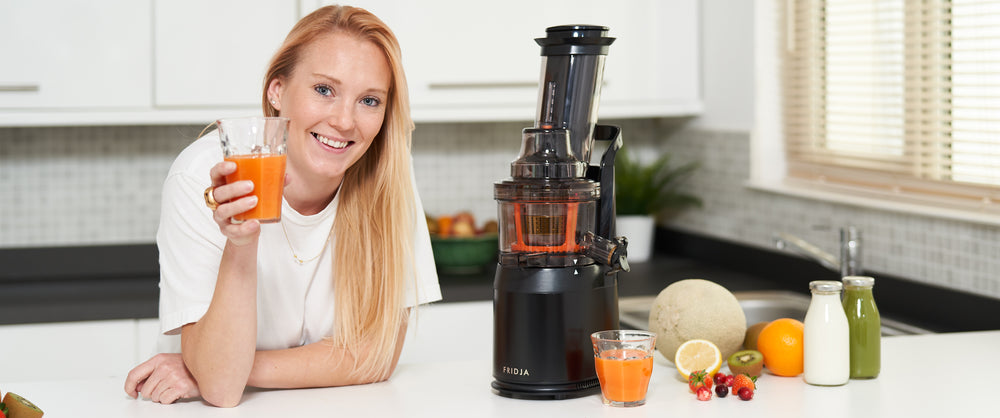


There is a world of difference between a carton of apple juice and a glass you have pressed yourself ten minutes ago. Fresh homemade apple juice is cloudy, fragrant and tastes of the apples you chose, whether that is the honeyed sweetness of a Gala or the sharp snap of a Bramley. It is also one of the easiest juices to get right, once you know which apples to buy and how to stop the juice turning brown.
This guide covers the best UK apple varieties for juicing, a simple step-by-step method, how many apples you need, and how to store what you make.
Which apples make the best juice?
Almost any apple will give you juice, but the variety decides the flavour, the colour and how much you get from each piece of fruit. Firm, crisp, juicy apples give the best yield. Soft or floury apples tend to produce less juice and a thicker, pulpier result.
Here are the varieties that work well and are easy to find in the UK:
- Gala: sweet, mild and very juicy. A good base apple that children usually like.
- Braeburn: a lovely balance of sweet and sharp, with plenty of juice.
- Cox's Orange Pippin: aromatic and complex, with a slightly nutty, honeyed flavour. Classic English apple juice.
- Pink Lady: sweet with a tangy finish and crisp flesh that presses well.
- Granny Smith: tart and green. Brilliant for adding freshness to a sweeter blend.
- Bramley: very sharp on its own, but a small amount lifts a sweet juice beautifully.
- Egremont Russet: nutty and rich, though the yield is lower because the flesh is drier.
Blending sweet and sharp apples
Single-variety juices are fun to try, but most people find a blend tastes best. A good starting point is two sweet apples (Gala, Braeburn or Pink Lady) to one sharp apple (Granny Smith or Bramley). If the juice tastes flat, add another sharp apple. If it makes your mouth pucker, add something sweet. Autumn is the best time to experiment, as UK apples are in season and often at their cheapest.
How to make apple juice at home, step by step
All you need is a few minutes and a slow juicer. Slow juicers press the fruit rather than shredding it at high speed, which gives a smoother juice with less foam.
- Chill the apples. Juicing cold apples gives you cold juice straight away and slows browning. An hour in the fridge is enough.
- Wash them well. Rinse under cold running water and rub off any dirt. Pull out the stalks and any leaves.
- Cut out bad bits. Trim away bruised, brown or damaged areas. They can make the juice taste musty.
- Decide whether to chop. The f2800 Open Whole Fruit Juicer has a 180mm open chute, the widest in the Fridja range, so whole apples go straight in. The f2500 Self Feeding Whole Fruit Juicer, a Which? Best Buy, has a 135mm chute that takes whole small and medium apples; halve any very large ones.
- Load and press. Fill the hopper, close the lid and switch on. Both juicers feed themselves, so you can get on with something else while they work.
- Add a squeeze of lemon. A little lemon juice stirred into the jug keeps the colour brighter and adds a gentle tang.
- Strain if you like. Fresh-pressed apple juice is naturally cloudy. For a smoother glass, pour it through a fine sieve. The f2800 comes with a fine mesh sieve that sits over the juice jug.
- Serve straight away over ice, or pour into a clean bottle and chill.
For more on getting every drop out of your fruit, including loading order and ripeness, see our guide to getting the best yield from a self-feeding juicer.
How many apples do you need for a glass?
As a rough guide, three to four medium apples make one 250ml glass of juice. Juicy, crisp varieties such as Gala and Braeburn sit at the lower end; drier apples such as russets need more. A 1kg bag of apples (around six to eight apples) usually gives you two glasses, depending on size and ripeness.
Why does apple juice go brown?
Cut or crushed apple reacts with oxygen in the air, which is the same reason a sliced apple browns on the chopping board. The juice is still safe to drink, but it loses some of its fresh colour and flavour. To keep it looking and tasting its best:
- Juice the apples cold, straight from the fridge.
- Add a squeeze of lemon juice to the jug as you go.
- Pour into a bottle filled to the top, so there is little air inside.
- Drink it soon after juicing, when the flavour is at its brightest.
How to store homemade apple juice
Fresh juice is unpasteurised, so treat it like any fresh food. Keep it in a clean, sealed bottle in the fridge and drink it within a day or two for the best taste.
Apple juice also freezes well. Pour it into freezer-safe bottles, leaving a little space at the top because it expands, or freeze it in ice cube trays to add to drinks and smoothies. Defrost in the fridge overnight.
Apple juice flavour ideas
Apple is the friendliest base for mixed juices because it softens stronger flavours. A few combinations to try:
- Apple and ginger: a thumb of fresh ginger to four apples gives a warming kick.
- Apple and carrot: sweet, bright and mellow. See our carrot juice recipes for more ratios.
- Apple, beetroot and carrot: earthy and vivid. Our ABC juice recipe walks you through it.
- Apple, pear and cinnamon: stir a pinch of cinnamon into the finished juice. Find more seasonal ideas in our autumn juice recipes.
- Apple, orange and carrot: a weekend favourite in our brunch juice recipe.
A note on sugar and portion size
Homemade apple juice contains no added sugar, but juicing releases the natural sugars from the fruit and leaves most of the fibre behind in the pulp. The NHS advises keeping fruit juice and smoothies to a combined total of 150ml a day, which counts as one of your 5 A Day, and drinking it with a meal to help protect your teeth. Eating whole apples is still the best way to get the fibre. Enjoy fresh juice as a treat with breakfast rather than a replacement for fruit.
Cleaning up and using the pulp
Rinse the juicer parts as soon as you finish, before the apple pulp dries on. It takes a couple of minutes, and our guide on how to clean a slow juicer properly has a quick daily routine. Apple pulp is too good to waste: stir it into muffins, porridge or flapjacks, or add it to the compost. There are plenty more ideas in our guide to ways to use juice pulp.
If you are choosing a juicer for apples, browse the full Fridja juicer range. All Fridja slow juicers also make nut milk, so you get more than juice from one machine.
Frequently asked questions
What are the best apples for juicing in the UK?
Crisp, juicy apples such as Gala, Braeburn, Pink Lady and Cox's Orange Pippin give the best yield and flavour. Most people prefer a blend of two sweet apples to one sharp one, such as Granny Smith or Bramley. Avoid soft, floury apples, which give less juice and a thicker, pulpier result.
Do you need to peel and core apples before juicing?
You do not need to peel apples for a slow juicer, as much of the colour and flavour sits just under the skin. Wash them well and remove the stalks. Coring is not needed for the machine to work, but some people prefer to remove the cores when making larger batches.
How long does homemade apple juice last in the fridge?
Fresh, unpasteurised apple juice tastes best on the day you make it. Kept in a clean, sealed bottle in the fridge, it is best drunk within a day or two. It will slowly darken and separate. Shake before pouring, and freeze any juice you will not drink in that time.
How do you stop homemade apple juice going brown?
Juice your apples cold from the fridge, add a squeeze of lemon juice to the jug, and pour the juice into a bottle filled right to the top so little air is left inside. Browning is a natural reaction with oxygen and the juice is still safe to drink, but it tastes fresher when bright.
How many apples does it take to make a glass of juice?
As a rough guide, three to four medium apples make a 250ml glass of juice. Very juicy varieties such as Gala and Braeburn need fewer, while drier apples such as russets need more. Ripeness and size also make a difference, so chilled, crisp apples in season usually give the most juice.