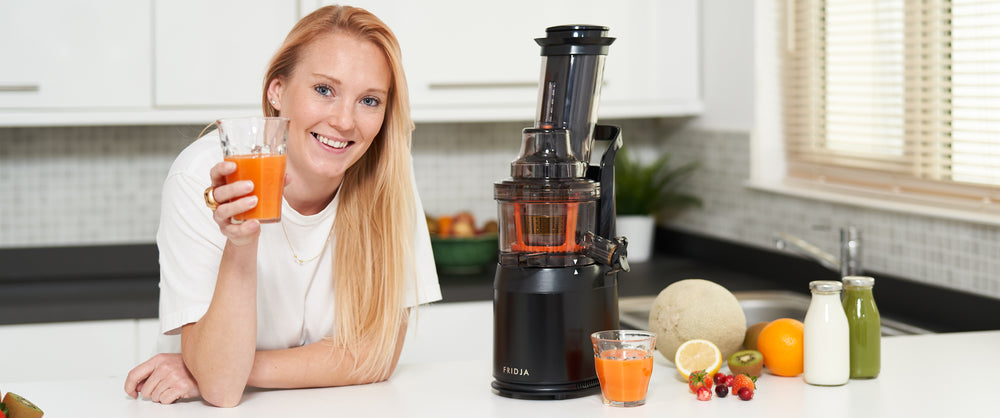


Carrot juice on its own can taste a little flat: sweet, earthy and slightly thick. Add the right partner, though, and it becomes one of the most cheerful glasses you can make at home. Carrots are cheap all year in the UK, they keep for weeks in the fridge and they give a generous amount of juice in a slow juicer. These seven carrot juice recipes cover sweet, sharp, spicy and savoury, so there is something for every morning.
Why carrot works so well as a juice base
Carrots are dense and naturally sweet, which makes them a good base for other flavours. They also give juice that lovely deep orange colour. Carrots are a source of beta-carotene, which the body converts into vitamin A. Juicing does remove most of the fibre, though, so a glass of juice sits alongside whole fruit and veg rather than replacing them. The NHS advises no more than 150ml a day of fruit juice, vegetable juice and smoothies combined.
How to prepare carrots for juicing
- Scrub rather than peel. Wash carrots under the tap with a brush. Peeling is only needed if the skin is damaged or very rough.
- Top and tail. Cut off the green tops and the very end of the root.
- Cut only if you need to. With a wide chute like the 180mm opening on the Fridja f2800, most carrots can go in whole. Very long carrots are easier to feed if you snap them in two.
- Use firm carrots. Bendy, old carrots give less juice and a duller flavour.
- Alternate hard and soft produce. Feeding carrots between softer fruit like orange or pear helps everything move through. Our guide to getting the best yield from a self-feeding juicer covers loading order in more detail.
7 carrot juice recipes to try
Each recipe makes roughly two small glasses. Treat the quantities as a guide: carrots vary a lot in size and juiciness, so taste as you go and adjust.
1. Classic carrot and apple
The easiest place to start. Apple brings sweetness and a little sharpness that lifts the earthy carrot.
- 4 medium carrots
- 2 apples (Braeburn or Cox work well)
- A squeeze of lemon
Juice the carrots and apples, then stir in the lemon. If it tastes too sweet, add more lemon. If it tastes too earthy, add another apple.
2. Carrot, orange and ginger
Bright, zingy and just right for a grey morning. Peel the oranges first, as the peel and thick pith make juice bitter.
- 4 carrots
- 2 oranges, peeled
- A thumb-sized piece of fresh ginger
Start with less ginger than you think you need, as it is strong when freshly juiced. For a fuller version with apple, try our apple, carrot, orange and ginger brunch juice.
3. Carrot, apple and beetroot
Deep red, sweet and earthy. This is the well-known ABC juice, and it is a gentle way into beetroot if you find it strong on its own.
- 3 carrots
- 1 small raw beetroot, scrubbed
- 2 apples
Beetroot stains, so rinse the juicer straight after. There is a full version in our ABC juice recipe, and more on handling beetroot in our beetroot juice guide.
4. Carrot, pineapple and mint
The sunniest of the seven, and pineapple is easy to find all year. It makes carrot juice taste sweet and tropical.
- 3 carrots
- A quarter of a pineapple, peeled and cut into chunks
- A small handful of mint leaves
Feed the mint in between pieces of pineapple so the leaves are pressed rather than left sitting on top.
5. Carrot, pear and lemon
Softer and rounder than carrot and apple, with a fresh finish. British pears are at their best in autumn.
- 4 carrots
- 2 ripe pears
- Half a lemon, peeled
Very ripe pears give a thicker, almost nectar-like juice. If you prefer it thinner, add a splash of cold water. You will find more seasonal combinations in our autumn juice recipes.
6. Carrot, celery and cucumber
A lighter, less sweet glass for anyone who finds fruit-heavy juice too sugary.
- 3 carrots
- 2 celery sticks
- Half a cucumber
- Half a lemon, peeled
Cut the celery into short lengths so the stringy fibres do not wrap around the auger.
7. Savoury carrot, tomato and red pepper
Think of this as a fresh, homemade vegetable juice. It is lovely with lunch or as the base for a quick chilled soup.
- 3 carrots
- 3 ripe tomatoes
- Half a red pepper, deseeded
- A pinch of salt and black pepper to finish
Season after juicing and serve over ice.
Tips for better-tasting carrot juice
- Chill everything first. Cold carrots and fruit give a fresher-tasting juice.
- Balance sweet and sour. A squeeze of lemon or lime is the quickest fix for juice that tastes flat or too sweet.
- Stir before serving. Carrot juice separates as it stands, so give it a quick stir.
- Drink it fresh. Juice tastes best straight away. If you need to keep some, fill an airtight bottle to the top and store it in the fridge.
- Use the pulp. Carrot pulp is great in muffins, fritters and soups. See our ways to use juice pulp for ideas.
Which juicer is best for carrots?
Carrots are hard and fibrous, so a slow juicer (also called a cold press or masticating juicer) is a good match. It presses produce with an auger rather than shredding it at high speed, which suits dense vegetables and leaves drier pulp.
The Fridja f2800 Open Whole Fruit Juicer has a 180mm open chute and a self-feeding hopper, so you can load carrots, whole apples and peeled oranges, press start and leave it to work. Its 250W AC motor turns slowly for cold-press extraction, and it also makes nut milk and comes with a sorbet attachment.
The Fridja f2500 Self Feeding Whole Fruit Juicer is a Which? Best Buy with a 135mm chute, and it handles hard vegetables like carrots and beetroot well. You can compare both in our slow juicer range.
Cleaning up after carrot juice
Carrot can tint plastic parts slightly orange over time. Rinse the strainer, auger and bowl as soon as you finish, before the pulp dries on. Most parts of the f2800 are top-rack dishwasher safe up to 40°C, although hand washing is recommended to help the silicone seals last longer. A soft brush and a drop of washing-up liquid is usually all you need. Our guide on how to clean a slow juicer properly covers the rest.
Frequently asked questions
Do you need to peel carrots before juicing?
No. A good scrub under running water is enough for most carrots, and the skin juices well. Peel them only if the skin is damaged or very rough, or if you prefer a slightly cleaner taste. Always cut off the green tops and trim the root end before you start juicing.
What fruit goes best with carrot juice?
Apple and orange are the most popular partners because they add sweetness and acidity that balance the earthy flavour of carrot. Pear, pineapple and lemon also work well. For something less sweet, try celery and cucumber, or make a savoury juice with ripe tomato and red pepper.
How many carrots do you need for a glass of juice?
Carrots are dense, so expect to use around five or six medium carrots for one small glass of pure carrot juice. The exact number depends on their size and freshness, and firm carrots give more juice. Mixing carrots with juicy fruit like orange or apple means you need fewer per glass.
Is carrot juice good for you?
Carrot juice contains beta-carotene, which the body converts into vitamin A, but juicing removes most of the fibre found in whole carrots. The NHS advises no more than 150ml of fruit juice, vegetable juice and smoothies combined each day. Enjoy it as part of a varied diet, alongside plenty of whole fruit and vegetables.
How long does fresh carrot juice last?
Fresh carrot juice tastes best straight away. If you need to keep it, pour it into a clean airtight bottle filled to the top and store it in the fridge, ideally drinking it within 24 hours. It will separate and may darken slightly, so shake or stir it well before drinking.