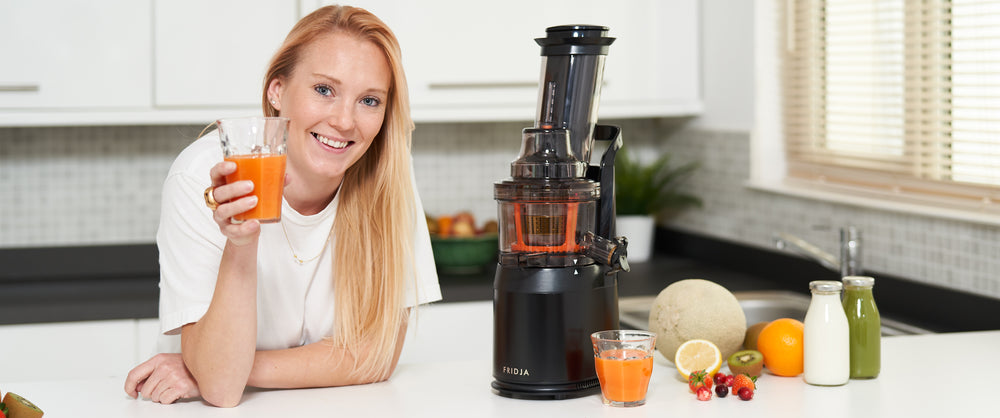


You have just made a jug of fresh juice and you can't finish it all. Can it go in the fridge until tomorrow? How about Thursday? Fresh juice is at its best the moment it leaves the juicer, but with a bit of care it keeps far better than most people expect. This guide covers how long fresh juice lasts, why it changes once it is made, and the simple storage habits that keep it tasting good for longer.
How long does fresh juice last?
The short answer depends on where it is kept and how it was made.
- At room temperature: drink it within a couple of hours. Fresh juice is not pasteurised, so it should not sit on the worktop all morning.
- In the fridge: juice from a slow juicer such as the f2500 Self Feeding Whole Fruit Juicer can be stored in an airtight container in the fridge for up to 72 hours. For the brightest flavour, aim to drink it within the first 24 hours.
- In the freezer: juice can be frozen and kept for a few months. The texture and taste change a little once thawed, but it is ideal for smoothies, ice lollies and mocktails.
Those times assume clean equipment, fresh produce and a fridge that is genuinely cold. If any of those slip, the window gets shorter.
Why fresh juice changes once it is made
Three things happen to juice after it is pressed.
Oxidation. As soon as juice meets air, oxygen starts to react with it. Apple and pear juice turn brown, green juice dulls, and the flavour flattens. Some vitamin C is also lost over time, as it breaks down when exposed to oxygen, light and warmth.
Separation. Juice naturally settles into layers, with heavier pulp sinking and a lighter, clearer layer on top. This is harmless. A quick shake or stir brings it back together.
Microbial growth. Because fresh juice has not been heat treated, the natural yeasts and bacteria on fruit and veg can multiply, especially in a warm kitchen. That is why the fridge matters so much.
Does the type of juicer make a difference?
It can. A slow juicer presses produce gently rather than shredding it at high speed, so less air is whipped into the juice and there is less foam. The f2500 turns its auger at around 50 RPM, which is one reason its juice keeps well in the fridge. Fast centrifugal juicers tend to produce frothier juice that separates and oxidises sooner, so it is best drunk straight away. Our guide to slow juicers and centrifugal juicers explains the differences in more detail.
How to store fresh juice in the fridge
A few small habits make a real difference to how long juice lasts.
- Start with cold, clean produce. Wash fruit and veg well and juice it straight from the fridge if you can. Cold produce gives cold juice, which keeps better from the start.
- Use glass jars or bottles with tight lids. Glass does not hold smells or stain, and a good seal keeps air out.
- Fill containers right to the top. The less air left in the jar, the slower the juice oxidises. Smaller jars filled to the brim are better than one large half-empty jug.
- Chill it straight away. Pour the juice into jars as soon as you have made it and put them in the fridge, rather than leaving them out while you tidy up.
- Keep it at the back of the fridge. The door is the warmest part. Your fridge should run at 5°C or below.
- Label each jar. A strip of masking tape with the day you made it saves any guessing later in the week.
Which juices keep best?
Not every juice ages the same way.
- Citrus-based juices such as orange, grapefruit and lemon blends hold their flavour well thanks to their natural acidity.
- Apple and pear juice brown quickly. A squeeze of lemon or lime stirred in slows this down and adds a nice sharpness.
- Carrot and beetroot juice keep their colour well, though the flavour softens after the first day.
- Green juices made with kale, spinach, cucumber or celery change fastest. They taste grassier and can turn slightly bitter, so drink these first.
- Ginger and turmeric blends often taste stronger after a night in the fridge, which some people prefer.
Looking for ideas to try? Our winter juice recipes use citrus, ginger and seasonal veg that all store well.
Can you freeze fresh juice?
Yes, and it is a good way to avoid waste when you have made more than you can drink in three days.
- Pour juice into freezer-safe containers, leaving a few centimetres of space at the top, as liquid expands when it freezes.
- Ice cube trays work well. Once frozen, tip the cubes into a labelled freezer bag and take out only what you need.
- Thaw juice in the fridge overnight, not on the worktop, then shake well before drinking.
- Once thawed, treat it like fresh juice and drink it within a day. Do not refreeze it.
Batch juicing for the week
Many people juice two or three times a week rather than every morning. With a 72-hour fridge window, one session on Sunday and another on Wednesday covers most of the week. A self-feeding juicer makes this easier, as you can load whole fruit through the 135mm chute, close the lid and leave it to work. If you are planning quantities, our guide on how much fruit you need for a glass of juice helps you buy the right amount, and a week of juicing shows a realistic routine for a busy household.
Juice the produce that keeps least well, such as leafy greens, for the first day or two, and save hardier combinations like carrot, orange and ginger for later in the week.
Taking juice to work or school
Juice in a bag warms up quickly. If you are carrying it with you, keep it cold. An insulated cup helps: the double-walled 304 stainless steel cup on the f600 Stainless Steel Portable Blender keeps drinks cold for hours, so a juice or smoothie poured at breakfast is still cold mid-morning. Otherwise, use a small cool bag with an ice pack and drink it before lunch.
How to tell if fresh juice has gone off
Trust your senses. Throw juice away if you notice:
- a sour, fizzy or alcoholic smell
- bubbles or a slight fizz on the tongue, which is a sign of fermentation
- a bulging lid or a hiss when you open the jar
- mould on the surface or around the rim
- a slimy texture
Browning or separation on its own is not a sign that juice is unsafe, but if in doubt, leave it out. Fresh juice is unpasteurised, so people at higher risk of food poisoning, such as pregnant women, young children and older people, should take extra care and stick to freshly made juice.
A clean juicer makes juice last longer
Leftover pulp in the strainer or auger can carry bacteria into your next batch. Rinse the parts straight after juicing, before pulp dries on. Our step-by-step guide on how to clean a slow juicer properly takes only a few minutes. And if you hate throwing pulp away, here are nine ways to use juice pulp in your cooking.
Browse our full range of slow juicers to find the one that suits how you juice.
Frequently asked questions
How long does fresh juice last in the fridge?
Juice made with a slow juicer such as the Fridja f2500 can be stored in an airtight container in the fridge for up to 72 hours. Flavour and colour are best in the first 24 hours, so drink green juices and apple juice first and keep the back of the fridge for storage, where it is coldest.
Can you drink fresh juice the next day?
Yes. Juice kept in a sealed glass jar at the back of a fridge running at 5°C or below is fine to drink the next day. Give it a good shake, as it naturally separates overnight. If it smells sour, tastes fizzy or the lid is bulging, throw it away instead.
How do you stop fresh juice from going brown?
Browning is caused by oxygen, so limit air contact. Fill jars right to the top, seal them tightly and chill the juice straight away. Stirring in a little lemon or lime juice also slows browning in apple and pear juice. A slow juicer adds less air during juicing, which helps too.
Can you freeze homemade juice?
Yes. Freeze juice in containers with space at the top, or in ice cube trays for easy portions. It keeps for a few months. Thaw it in the fridge overnight, shake well and drink it within a day. Thawed juice is slightly thinner, so it works particularly well in smoothies and mocktails.