

Most juicing plans fall apart by Wednesday. The fridge is full of produce you meant to use, the juicer needs washing, and everyone is out of the door by eight. A weekly juicing routine only works if it fits around real life: a short shopping list, a little prep at the weekend and recipes that use up what you bought.
This is a practical seven-day plan for a busy household. It is not a cleanse or a replacement for meals. It is a simple way to enjoy fresh juice alongside a normal, balanced diet, without waste or stress.
Before you start: a sensible approach to juice
Fresh juice is a lovely way to enjoy fruit and vegetables, but it is worth keeping it in proportion. UK NHS guidance suggests limiting fruit juice and smoothies to a combined 150ml a day, because juicing releases the natural sugars from fruit. A glass of juice counts as one of your five a day, but only once, however much you drink.
Two easy habits help:
- Lean on vegetables. Cucumber, celery, carrot and leafy greens bring flavour and volume with less sugar than an all-fruit juice.
- Drink it with a meal. A small glass alongside breakfast is better for your teeth than sipping juice through the day.
Juice is not a detox and it does not replace whole fruit, which keeps its fibre. Think of it as one enjoyable part of the week, not the whole plan.
The weekend: shop and prep
Your shopping list for the week
This list makes roughly two small glasses a day for two people. Buy what is in season and adjust to taste.
- 8 to 10 apples (a mix of sweet and sharp, such as Gala and Braeburn)
- 1kg carrots
- 2 cucumbers
- 1 head of celery
- 2 or 3 beetroot
- 4 oranges and 2 lemons
- 2 pears
- A large bag of spinach or kale
- A thumb or two of fresh ginger
- A small bunch of mint
Prep that saves time later
Spend 20 minutes on Sunday washing and sorting. Scrub carrots and beetroot, rinse greens and spin them dry, and store everything in clear containers or bags at the front of the fridge so it gets used. Peel citrus ahead if you like, because citrus peel can make juice bitter.
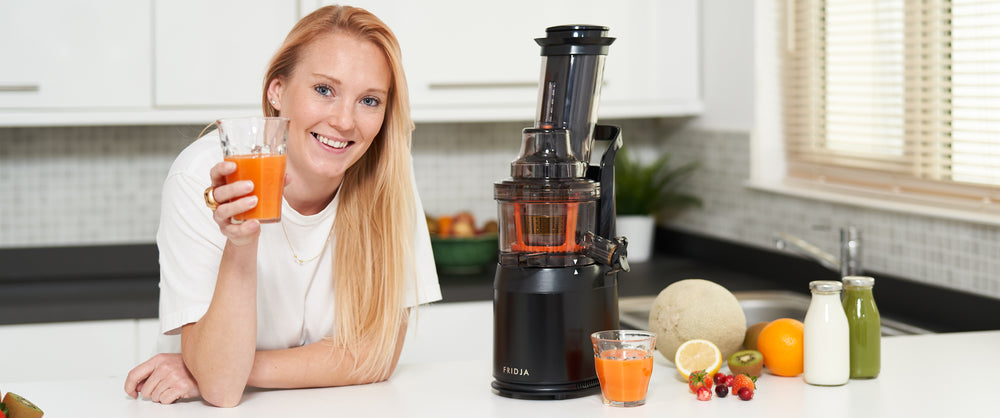
A self-feeding juicer cuts prep further. The Fridja f2500 Self Feeding Whole Fruit Juicer has a 135mm feeding chute, so most apples and pears go in whole: drop them in, close the lid and get on with making breakfast. It is a Which? Best Buy and, like all Fridja slow juicers, it can also make nut milk if you want to vary things later in the week.
Your seven-day weekly juicing routine
Monday: apple, carrot and ginger
An easy, familiar start. Two carrots, one apple and a small piece of ginger. Sweet, warming and good for winning over anyone new to juice.
Tuesday: green apple and cucumber
Half a cucumber, a handful of spinach, one apple and a squeeze of lemon. Fresh rather than grassy. Our guide to the best juicer for leafy greens explains how to get the most from spinach and kale.
Wednesday: beetroot, apple and lemon
One small beetroot, two apples and a little lemon. Earthy and bright. Rinse the juicer straight after, as beetroot can stain.
Thursday: orange and carrot
Two peeled oranges and two carrots. A good choice for a midweek morning when you want something simple and familiar.
Friday: pear, celery and mint
Two sticks of celery, one pear and a few mint leaves. Lighter and less sweet, with a cool finish.
Saturday: weekend brunch jug
Make a larger batch for the table: apples, carrots, an orange and a little ginger. Our brunch juice recipe has exact quantities.
Sunday: use-it-up juice
Whatever is left in the fridge. A soft apple, the last of the cucumber, a few greens. This is the day that stops food going to waste, and often turns out to be a favourite.
Making juice on busy mornings
The routine works best when juicing takes less time than making a cup of tea. A few tips:
- Set up the night before. Put the juicer on the worktop and the produce you need in one container.
- Juice soft and hard produce together. Alternate leafy greens with apples or carrots so the juicer keeps moving smoothly.
- Use the right size jug. Juice straight into glasses on a weekday, and use the larger jug when you are making enough for the family.
- Rinse straight away. A quick rinse of the parts while pulp is still wet takes a minute. Left until the evening, it takes much longer.
Storing fresh juice
Fresh juice tastes best straight away, but you can make it ahead:
- Fridge. Pour into a clean glass bottle, fill it to the top to keep air out, seal and chill. Drink within 24 to 48 hours.
- Freezer. Freeze small portions in ice cube trays or freezer-safe bottles, leaving room for expansion. Defrost overnight in the fridge.
- Lemon helps. A squeeze of lemon slows browning, especially in apple and pear juices.
Cleaning without the hassle
A juicer that is quick to clean is one you will keep using. The f2500 has fewer parts to wash and its removable parts are dishwasher safe on cycles under 40°C. Its anti-drip tap also helps keep the worktop clean between glasses. For a step-by-step routine, see our guide on how to clean a slow juicer properly.
Do not waste the pulp
Juicing produces a surprising amount of pulp. Carrot and apple pulp can go into muffins, veggie burgers, soups and stocks, and anything left can be composted. Our article on ways to use juice pulp has plenty of ideas.
Making it work for the whole household
Not everyone in the house will want the same juice. Children often prefer sweeter, simpler combinations such as apple and carrot, served in a small glass with breakfast. Adults may enjoy sharper, greener blends. An easy approach is to juice a mild base first, pour the children's glasses, then add a little ginger, lemon or extra greens to the rest. It keeps everyone happy without making two separate batches. If you are curious about how slow juicing compares with other methods, our article on whether slow juicers are healthier than centrifugal juicers looks at the evidence in a balanced way.
Keeping it going after week one
Once the routine feels natural, change it with the seasons. In autumn and winter, apples, pears, beetroot and root vegetables are at their best and good value. In spring and summer, try cucumber, berries and fresh herbs. Keep the same structure: shop once, prep once, juice small glasses and use everything up.
If you are still deciding whether juicing is right for you, our comparison of slow juicers and blenders covers the key differences, and you can browse the full range of Fridja juicers to find the model that fits your kitchen.