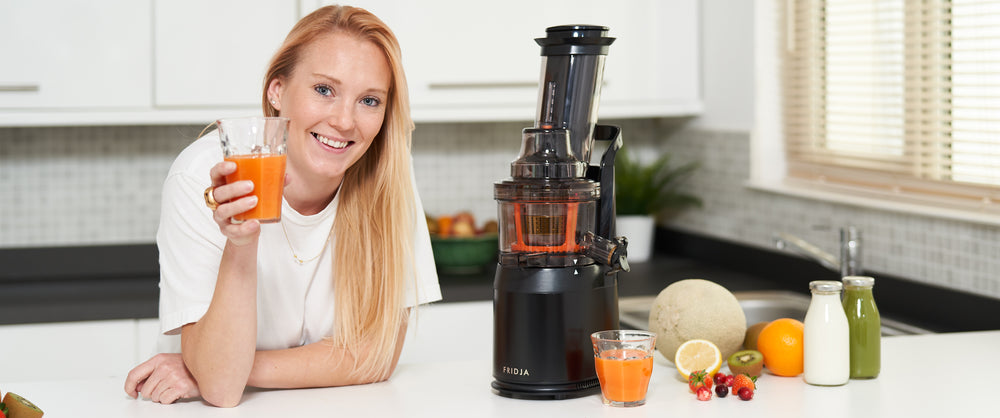


Winter is a better season for juicing than most people expect. The fruit bowl fills up with clementines, blood oranges and pears, and the veg drawer has beetroot, carrots, kale and red cabbage at their cheapest. Add a knob of fresh ginger and you have bright, warming juices that taste nothing like the sweet cartons in the supermarket chiller.
Below are seven winter juice recipes built around UK produce, plus the prep habits that make cold-weather juicing quicker and tidier. Each recipe makes one large glass or two small ones. Amounts are a guide, so adjust to taste and to the size of your fruit.
What is in season for juicing in a UK winter
From November to February, these are the ingredients worth building your juices around:
- Citrus: clementines, satsumas and oranges through the winter, with blood oranges arriving from January. Lemons and limes are always useful for balance.
- Apples and pears: British stored apples and pears last well into the new year and give every juice a sweet, mellow base.
- Root veg: carrots and beetroot are cheap, keep for weeks and give deep colour.
- Brassicas and greens: kale and red cabbage are at their best in cold weather. A little goes a long way.
- Ginger and turmeric root: both add warmth and a peppery kick, and both are easy to find in larger supermarkets.
- Pomegranates: in season from autumn to early winter and a lovely way to add colour.
If you want ideas for the tail end of autumn, our autumn juice recipes use many of the same apples, pears and roots.
Before you start: winter prep that saves time
Take produce out of the fridge first
Very cold fruit and veg can make juice taste flat, and icy juice is not always welcome on a dark morning. Leave tomorrow's ingredients on the worktop overnight, or take them out of the fridge while you put the kettle on.
Decide what to do with citrus peel
Thin-skinned clementines and satsumas can go in whole if you like a slightly zesty edge. For oranges, grapefruit and lemons, most people prefer to cut away the thick peel, because the oils and white pith can make juice bitter. Leaving some pith on is fine. If you want to know when a separate citrus press makes sense, read our guide on whether a citrus juicer is worth it.
Handle ginger, turmeric and beetroot carefully
There is no need to peel ginger; just scrub it. Feed it in between harder pieces such as apple or carrot so it is pressed properly. Turmeric and beetroot both stain, so wear an apron, use a plastic or glass chopping board and rinse the juicer straight after use.
7 winter juice recipes
1. Blood orange, carrot and ginger
3 blood oranges (or ordinary oranges before January), peeled; 4 medium carrots; a 2cm piece of ginger. Sweet, earthy and sharp at the finish. This is a good first juice if you are new to ginger, as the carrot softens the heat.
2. Clementine, apple and ginger
4 clementines; 2 apples, such as Cox or Braeburn; a 1cm to 2cm piece of ginger. Light and zesty, with plenty of natural sweetness. It is a family favourite and easy to make in bigger batches.
3. Beetroot, apple and lemon
1 medium raw beetroot, scrubbed; 2 apples; half a lemon, peeled. The apple rounds off the earthy beetroot and the lemon keeps it fresh. Our full beetroot juice guide has more ways to balance the flavour.
4. Kale, pear and lemon
A large handful of kale (about 4 leaves); 2 ripe pears; half a lemon, peeled; a few slices of cucumber if you have some. A gentle green juice for people who usually find green juice too grassy. Roll the kale leaves into a tight bundle before you feed them in.
5. Carrot, apple and turmeric
4 carrots; 1 apple; a 2cm piece of fresh turmeric root; a squeeze of lemon. Golden, mellow and slightly peppery. For more carrot combinations, see our carrot juice recipes.
6. Red cabbage, apple and lime
A quarter of a small red cabbage; 2 apples; 1 lime, peeled. It sounds unusual, but the result is a vivid purple juice that tastes mostly of apple with a crisp, peppery edge. Cut the cabbage into wedges that fit your chute.
7. Pink grapefruit, pomegranate and pear
1 pink grapefruit, peeled; the seeds of half a pomegranate; 1 pear. Tart, jewel-coloured and very refreshing. It also works well as a base for party drinks, and our Christmas mocktail recipes build on similar flavours.
Which juicer suits winter produce?
Winter ingredients are a mix of hard roots, fibrous greens and juicy citrus, which suits a slow masticating juicer. Instead of shredding produce at high speed, a slow juicer presses it with an auger, so you get smooth juice and drier pulp from carrots, beetroot and kale alike.
The f2500 Self Feeding Whole Fruit Juicer is a Which? Best Buy. You load whole apples, pears and carrots into the 135mm hopper, close the lid and it feeds itself, which helps on busy winter mornings. It handles leafy greens such as kale, hard veg such as beetroot and citrus fruit.
The f2800 Open Whole Fruit Juicer has a 180mm open chute, the widest in the Fridja range, so whole apples, oranges and pears go straight in. It also comes with a sorbet attachment, which is handy for turning frozen fruit into a quick pudding over the holidays.
You can compare both in our slow juicer collection.
How to store winter juice
Fresh juice tastes best straight away, but you can make it ahead. Pour it into a clean, airtight bottle, fill it close to the top to limit air, and keep it in the fridge. Juice from a Fridja slow juicer keeps for up to 72 hours this way. Citrus-heavy juices hold their colour best; beetroot and apple juices may darken slightly, which is normal.
A quick rinse straight after juicing stops beetroot and turmeric from staining the filter. Our guide to cleaning a slow juicer properly covers the full routine, and you can turn the leftover pulp into soups, muffins and crackers with these ideas for juice pulp.
A balanced way to enjoy juice
Fresh juice is a tasty way to enjoy fruit and veg, but it is not a replacement for eating them whole. The NHS advises that fruit juice and smoothies count as a maximum of one of your 5 A Day, with a combined total of 150ml a day, and suggests drinking them with a meal to reduce the risk of tooth decay. Recipes that lean on vegetables, like the kale, red cabbage and carrot juices above, are naturally lower in sugar than all-fruit blends.
Frequently asked questions
What fruit and veg are best for juicing in winter?
In the UK winter, look for clementines, oranges, blood oranges from January, lemons, apples, pears, beetroot, carrots, kale, red cabbage and pomegranates. Fresh ginger and turmeric root add warmth. These ingredients are in season or store well, so they are usually good value and taste their best from November to February.
Do you need to peel oranges before juicing them?
It depends on taste. Thin-skinned clementines and satsumas can go in whole for a zesty edge. With oranges, grapefruit and lemons, the thick peel and pith can make juice bitter, so most people cut the peel away first. Leaving a little white pith on is fine and does not spoil the flavour.
Can you juice fresh ginger without peeling it?
Yes. Scrub the ginger well and feed it in unpeeled, ideally between harder pieces such as apple or carrot so the auger presses it fully. Start with about 1cm to 2cm per glass, as fresh ginger juice is strong. You can always add more next time once you know how much heat you like.
How long does fresh winter juice last in the fridge?
Juice made in a Fridja slow juicer keeps for up to 72 hours in a clean, airtight container in the fridge. Fill the bottle close to the top to limit air. It tastes freshest on the first day, and beetroot or apple juices may darken slightly over time, which is normal and harmless.