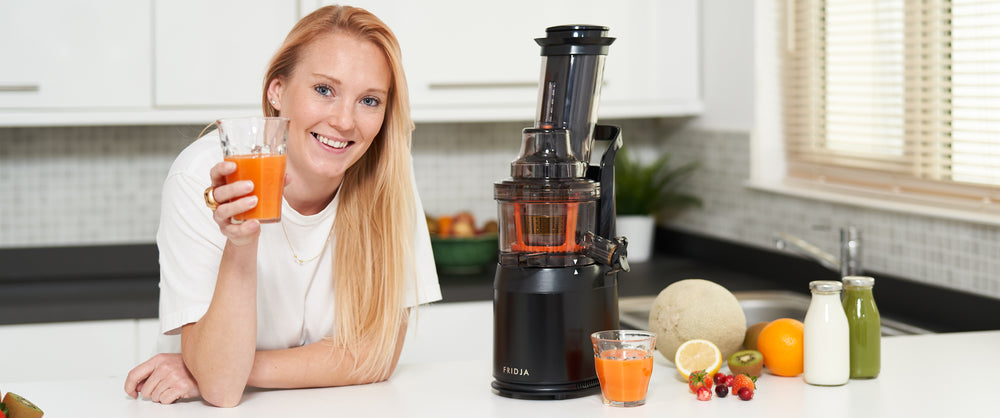


A juicer only earns its place on the worktop if you actually use it on a busy weekday. The best kitchen juicers are not the ones with the biggest motors or the longest list of attachments. They are the ones that make fresh juice feel quick, tidy and realistic at 7am on a Tuesday.
For some households that means a whole fruit juicer that cuts out most of the chopping. For others it is a slow juicer that handles leafy greens and ginger with less waste, or a simple citrus press for fresh orange juice at breakfast. This guide walks through each type so you can match the machine to the way you live.
Start with what you actually drink
Before comparing models, be honest about your usual glass. Apple, carrot and ginger needs a different machine from fresh orange juice, and a daily green juice needs something different again. Buying for the recipe you hope to make one day is the quickest way to end up with an appliance gathering dust in a cupboard.
Think about space too. A juicer you can leave out on the worktop is one you will use far more often than a bigger machine you have to lift out of a cupboard every time. Compact, good-looking designs make that much easier.
The main types of juicer
Whole fruit juicers: best for busy mornings
Whole fruit juicers have a much wider feed chute, so apples, pears and peeled oranges can go in whole or halved. Less chopping means fewer steps between opening the fridge and pouring a glass, which matters when you are making juice for more than one person.
The Fridja f2800 Open Whole Fruit Juicer takes this furthest, with a 180mm open chute and a self-feeding hopper: load it with whole fruit, press start and let it work while you get on with breakfast. The f2500 Self Feeding Whole Fruit Juicer, a Which? Best Buy, uses the same idea, with a lid you close so it can feed itself. Our whole fruit juicer review guide covers what to compare in more detail.
Always remove stones, very thick peel and tough skins before juicing. Even the most convenient machine works better and lasts longer when the ingredients are prepared sensibly.
Slow juicers: best for greens and smooth texture
Slow juicers, also called cold press or masticating juicers, crush and press produce at low speed. They are a strong choice if you like green juices with spinach, celery, kale or herbs, as the gentle pressing gives a smoother juice and drier pulp, so you get more from every bag of produce. They are usually quieter too, which is a bonus at 6.30am in a shared home.
Fridja's whole fruit juicers are slow juicers too, so you get the cold-press result without the extra prep. The f1900 Whole Fruit Juicer is a good example. If greens are your priority, our guide to the best juicer for leafy greens explains what to look for, and the slow juicer buying guide covers the wider picture.
Citrus juicers: best for simple breakfast juice
If fresh orange, lemon or grapefruit juice is what you drink most, an automatic citrus juicer is the most direct option. Halve the fruit, press it onto the cone and the juice flows straight into your glass. Citrus juicers are small, quick to clean and ideal for brunches and busy breakfasts, though they are not designed for apples, carrots or greens. Wondering if one is worth the space? See is a citrus juicer worth it.
Centrifugal juicers: fast but louder
Centrifugal juicers use a fast-spinning blade and basket. They are quick with hard fruit and veg, but tend to be noisier, produce more foam and struggle with leafy greens. If you mainly want a fast glass of apple and carrot and do not mind the noise, they can work, but most people who juice regularly end up preferring a slow or whole fruit model.
Features that make daily juicing easier
- Easy-clean parts. Fewer awkward corners and a filter that rinses clean quickly will decide whether you juice every day or once a month. Use the cleaning brush straight after juicing, before pulp dries.
- Anti-drip spout. Keeps the worktop clean between glasses.
- Reverse function. On slow juicers, a quick reverse can clear fibrous celery or greens without taking the machine apart.
- Jug and pulp container size. Bigger is better for family batches; smaller saves space if it is just you.
- Noise. Slow juicers are usually much quieter than centrifugal ones.
For a step-by-step routine, see how to clean a slow juicer properly.
Get better juice from day one
Fresh, firm produce makes the biggest difference. Choose crisp apples and carrots, bright citrus and greens that have not started to wilt. Wash everything well and trim any damaged bits.
With mixed juices, alternate soft and hard ingredients, such as a piece of apple between handfuls of spinach. It helps everything move through evenly and makes cleaning easier. Drink juice soon after making it for the brightest flavour, or store it in a sealed, full bottle in the fridge for a few hours. A squeeze of lemon keeps green juices tasting fresh.
Keep expectations sensible, too. Juice is an easy way to enjoy more fruit and veg, but it does not replace whole produce and its fibre. A good routine includes both. For a crowd-pleasing recipe to start with, try our apple, carrot, orange and ginger brunch juice.
Choose the one you will actually use
The best juicer is the one that makes your favourite drink easy enough to repeat. A whole fruit juicer saves time before work, a slow juicer suits a daily green juice and a citrus juicer covers fresh orange at breakfast. Give it a spot on the worktop, keep a few favourite ingredients in the fridge, and fresh juice becomes the easy part of your morning. Browse the full Fridja juicer range to compare models.