

Pomegranates are at their best in UK shops from late autumn into January, and fresh pomegranate juice is one of the most rewarding things you can make with a juicer. It is deep red, sweet and sharp at the same time, and tastes nothing like the cartons. The catch is the fruit itself. Cut one open carelessly and you will find red splashes on your worktop, your cupboard doors and probably your shirt.
This guide shows you how to get the seeds out cleanly, how to juice them in a slow juicer, and a few simple recipes to try while pomegranates are cheap and plentiful.
What you need
- 2 to 3 ripe pomegranates (heavy for their size, with firm, unbroken skin)
- A large bowl of cold water
- A sharp knife and a chopping board
- A sieve or colander
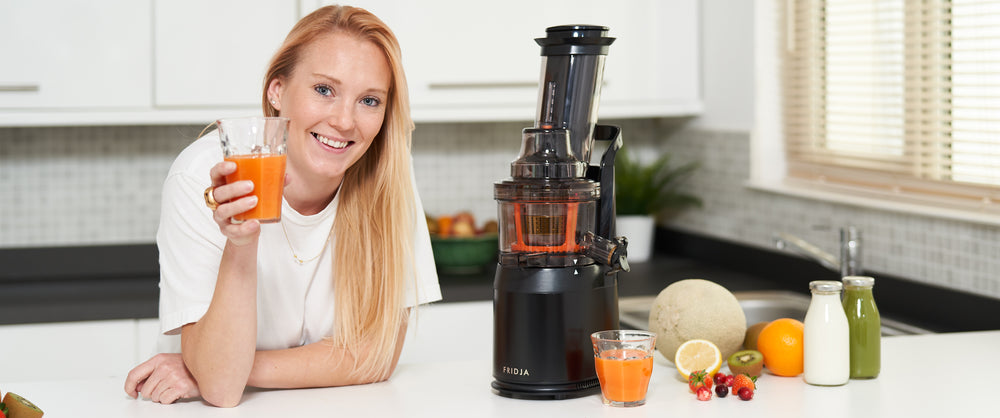
- A slow (masticating) juicer such as the Fridja f2500 Self Feeding Whole Fruit Juicer
- An apron or an old top, as pomegranate juice stains fabric
As a rough guide, one large pomegranate gives around 100 to 150ml of juice, so two or three will fill a glass. Our guide to how much fruit you need for a glass of juice covers other fruit too.
Step 1: Get the seeds out without the mess
The seeds, properly called arils, are the juicy red parts. The skin and the white pith around them are tough and bitter, so they should not go into your juicer. The tidiest way to separate them is under water.
- Score, do not slice. Cut a shallow circle around the crown at the top and lift it off. You will see pale ridges running down the fruit. Score the skin along each ridge, just deep enough to break the skin.
- Open it under water. Hold the fruit in the bowl of water and gently pull it apart into sections along the scored lines. Doing this below the surface stops the juice spraying.
- Loosen the arils. Still under water, ease the arils away from the pith with your thumbs. They sink to the bottom, while most of the pith floats.
- Skim and drain. Scoop the floating pith off the top, then pour the arils into a sieve and let them drain for a minute.
Two pomegranates take around ten minutes once you have the knack. If you are short on time, the other well-known method is to cut the fruit in half across the middle, hold it cut side down over a bowl and tap the back firmly with a wooden spoon. It is quicker but messier, so wear that apron.
Step 2: Juice the arils
A slow juicer is the best tool for pomegranate. It presses the arils rather than shredding them at high speed, so you get smooth juice and the small inner pips come out with the pulp. The f2500 turns its auger at around 50 RPM, and Fridja lists pomegranates among the produce it is suitable for.
- Assemble the juicer and put the juice jug under the outlet with the tap closed.
- Tip the drained arils into the hopper. With the f2500 you can add them all at once, close the lid and let it feed itself.
- Switch on and let it work. If the flow slows or the arils start to clog, use the reverse function for a few seconds, then carry on.
- Open the tap, pour and give the juice a quick stir.
Arils on their own are soft and wet, so many people like to add a firmer fruit such as apple or pear in the same batch. It helps push everything through and balances the sharpness. For more on getting the most from a self-feeding machine, see our tips for a better yield from a self-feeding juicer.
If you prefer to drop in whole apples and pears alongside the arils, the f2800 Open Whole Fruit Juicer has a 180mm open chute. You can compare both in our slow juicer range.
Step 3: Four easy pomegranate juice recipes
Pure pomegranate juice is quite tart and tannic. These combinations soften it and make it go further.
Pomegranate and apple
Arils from 2 pomegranates with 2 sweet apples, such as Gala or Braeburn. This is the easiest place to start, and the apple adds body and sweetness.
Pomegranate, orange and ginger
Arils from 2 pomegranates, 2 peeled oranges and a thumb-sized piece of fresh ginger. Bright and warming, and a good winter breakfast juice.
Pomegranate and pear
Arils from 1 pomegranate with 2 ripe pears. Softer and rounder than the apple version, with a lovely pink colour.
Pomegranate spritz
Half fill a glass with pomegranate and apple juice, top up with chilled sparkling water and add a squeeze of lime. It makes a good alcohol-free drink for a party. You will find more ideas in our Christmas mocktail recipes and winter juice recipes.
Stains: how to keep your kitchen clean
Pomegranate juice stains quickly, especially on wooden boards, grout and light fabrics.
- Work on a plastic chopping board rather than a wooden one.
- Wipe splashes off the worktop straight away with a damp cloth.
- Close the juicer tap before you lift the jug away to stop drips.
- If juice gets onto clothing, rinse it from the back of the fabric with cold water as soon as you can, then wash as normal. Hot water can set the stain.
Cleaning the juicer afterwards
Rinse the juicer parts as soon as you finish, before the red juice has a chance to dry and tint the plastic. Run water through the strainer and use the cleaning brush that comes with the f2500 to clear the fine mesh. The detachable parts are dishwasher safe below 40°C. Our guide on how to clean a slow juicer properly has a full routine.
Do not throw the pulp straight in the bin either. Pomegranate and apple pulp can go into muffins or porridge, and there are more ideas in our post on ways to use juice pulp.
Storing pomegranate juice
Fresh juice tastes best on the day you make it. Fridja advises that juice made with the f2500 keeps in an airtight container in the fridge for up to 72 hours. Fill the bottle close to the top to limit air, and give it a shake before pouring. You can also freeze pomegranate juice in ice cube trays and add the cubes to sparkling water or other juices.
Whole pomegranates keep for a couple of weeks in the fridge, and loose arils for a few days in a covered container, so you can de-seed a batch ahead of time.
Is pomegranate juice good for you?
Pomegranates contain vitamin C and plant compounds called polyphenols, and fresh juice is a tasty way to enjoy them. It is still fruit juice, though, so it contains natural sugars and less fibre than eating the arils whole. NHS guidance is to keep fruit juice and smoothies to a combined 150ml a day, which counts as one of your 5 A Day. If you take regular medication, it is worth checking with your pharmacist before drinking pomegranate juice often, as it can interact with some medicines.
Frequently asked questions
Can you put a whole pomegranate in a juicer?
No. The thick skin and white pith are bitter and fibrous, and they will spoil the flavour of your juice. Take the arils out first, ideally in a bowl of water to keep the mess down, then juice only the arils. You can add apple or pear alongside them for a sweeter, smoother result.
How many pomegranates do you need for a glass of juice?
Usually two to three, depending on size and ripeness. A large, heavy pomegranate gives roughly 100 to 150ml of juice. If you are mixing it with apple, orange or pear, one or two pomegranates is plenty for a generous glass, and the other fruit makes the juice less tart.
Do you juice pomegranate seeds or remove them?
You juice the arils, the red jewel-like seeds, whole. A slow juicer presses the juice out of them and sends the small hard pips inside out with the pulp. There is no need to remove the pips by hand. Avoid using a high-speed blender, which grinds the pips and makes the drink bitter and gritty.
How long does fresh pomegranate juice last?
It tastes best within a day of juicing. Stored in an airtight bottle in the fridge, juice made in the Fridja f2500 keeps for up to 72 hours. The colour may darken slightly and the juice can separate, so shake it before pouring. For longer storage, freeze it in ice cube trays.
What is the best juicer for pomegranates?
A slow, masticating juicer is the best choice, because it presses the arils gently and separates the pips into the pulp. The Fridja f2500, a Which? Best Buy, is suitable for pomegranates and feeds itself once the lid is closed. Browse our full juicer collection to compare models.